
Common Valve Failures in Steam Lines: Causes, Prevention & Best Solutions
TABLE OF CONTENTS
Seat leakage, thermal cracking, water hammer — the most common steam line valve failures explained, with material selection and engineering prevention guidance.
Steam systems are among the most demanding environments for industrial valves. Operating temperatures above 400°C, pressure classes up to ASME Class 900 or higher, and continuous thermal cycling create conditions where even correctly specified valves will eventually show wear — and incorrectly specified valves fail much sooner.
Understanding why steam line valves fail helps plant engineers and procurement teams make better decisions at both the specification stage and during planned maintenance windows.
1. Seat Leakage
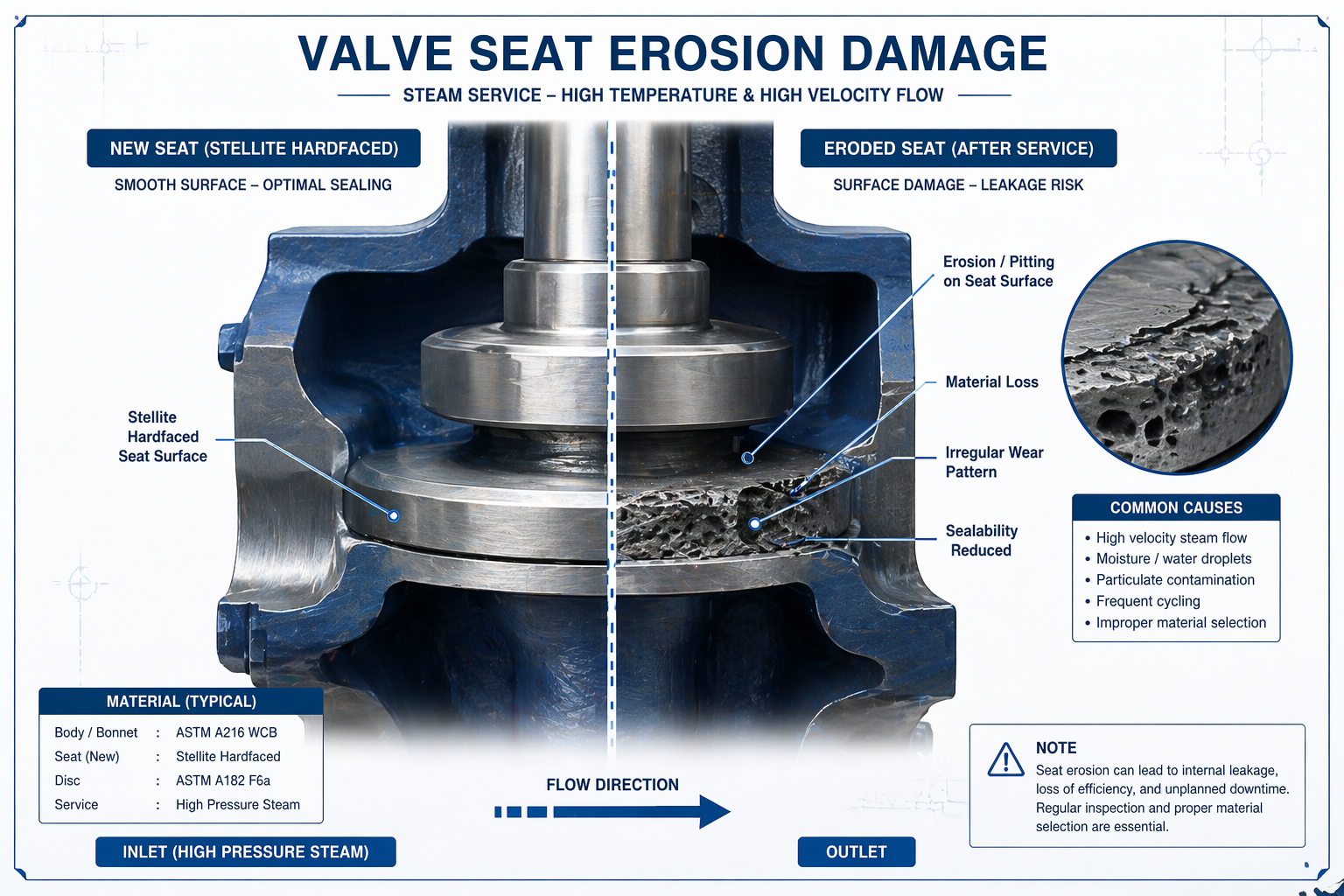
Seat leakage is the most frequently reported valve problem in steam systems, and it rarely happens suddenly. It develops gradually through erosion, thermal cycling, or debris damage to sealing surfaces.
High-velocity steam carries particulates that erode soft or unprotected seat faces over time. In throttling applications — where globe valves partially open and close repeatedly — erosion accelerates significantly compared to full open/close isolation service.
Prevention starts at the specification stage: globe valves and gate valves in high-temperature steam service should be specified with Stellite-hardfaced seating surfaces rather than standard stainless steel trim. Stellite (cobalt-chromium alloy) resists erosion and maintains sealing performance under thermal cycling conditions where softer trim materials degrade quickly.
2. Stem Packing Leakage
Steam escaping from around the valve stem is a common maintenance issue, particularly in older valves or those that have been in continuous service without packing inspection.
Standard packing materials harden and lose flexibility at elevated temperatures. For steam service above 260°C, graphite packing is the standard specification — it maintains sealing performance across a wide temperature range and does not harden or shrink with heat. PTFE-based packing is not suitable for high-temperature steam service despite being common in lower-temperature applications.
Gland follower adjustment is a temporary fix. If packing requires frequent retightening, the root cause is usually packing material degradation or stem surface wear, not gland bolt torque.
3. Thermal Cracking and Body Stress
Rapid temperature changes create thermal stress in valve bodies, bonnets, and flanged connections. This is particularly common during plant startup after an unplanned shutdown, where cold pipelines are suddenly exposed to high-temperature steam.
Material selection directly affects thermal stress resistance. ASTM A216 WCB carbon steel is standard for moderate temperature service, but above approximately 425°C, chrome-moly alloy steel — ASTM A217 WC6 or WC9 — is required. Using WCB bodies in service conditions that exceed their rated temperature range accelerates thermal fatigue and can cause cracking at stress concentration points such as flange necks and bonnet joints.
Controlled startup procedures — gradual pressurisation and temperature ramp-up — reduce thermal shock regardless of material specification.
4. Valve Sticking and Seizing
Gate valves and globe valves that are left in the fully open position for extended periods sometimes seize and become difficult to operate. In steam systems, this is often caused by oxide scale build-up on the stem threads or inside the body cavity, combined with lack of periodic operation.
Valves should be operated through their full travel at regular maintenance intervals — even if the process does not require it. This prevents scale from locking moving parts and identifies early signs of corrosion or misalignment before they become a safety issue.
5. Water Hammer Damage
Water hammer is one of the most damaging events a steam line valve can experience. When condensate accumulates in a steam line and is struck by high-velocity steam flow, the resulting pressure wave can crack valve bodies, damage seats, and distort flanged connections.
The root causes are usually poor drainage design — insufficient low-point drains or failed steam traps allowing condensate to accumulate — combined with rapid valve opening that accelerates steam flow before the line is properly warmed through.
Non-return valves and check valves on steam lines should be specified for water hammer resistance. Swing check valves can suffer disc and hinge damage in water hammer events; tilting disc or non-slam designs handle pressure transients better in these applications.
6. Wrong Valve Selection for the Service Condition
Many steam line valve failures trace back to an incorrect specification decision made at the procurement stage, not a manufacturing defect.
Common mismatches include:
- Soft-seated ball valves specified in high-temperature steam service where metal seats are required
- Floating ball valve designs used at pressure classes above ASME Class 300, where trunnion-mounted designs are more appropriate
- Gate valves used for throttling service, causing wire drawing and seat erosion that destroys sealing surfaces
- Carbon steel bodies specified for service temperatures that require alloy steel
The fix is reviewing the valve datasheet against actual operating conditions — pressure class, temperature, fluid phase, and cycling frequency — before placing an order, not after a failure occurs in service.
Best Valve Types for Steam Line Applications
Matching valve type to function is the foundation of reliable steam system performance:
- Gate valves — full-bore isolation; specify with alloy steel body and Stellite trim for high-temperature service
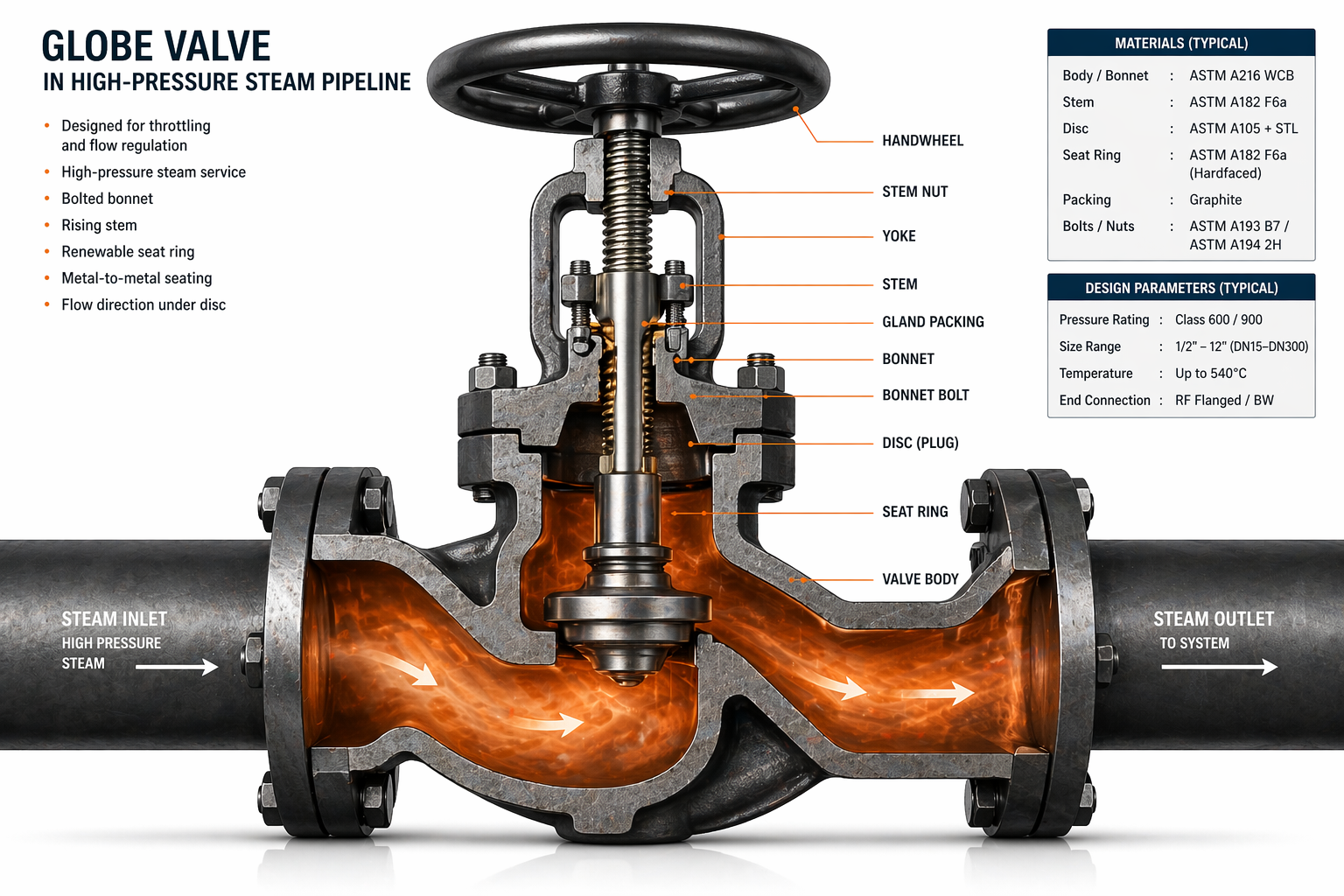
- Globe valves — throttling and regulation; hardfaced trim essential for cycling applications
- Check valves — backflow prevention; tilting disc or non-slam designs for pump discharge and fast-trip circuits
- Ball valves — utility drain lines and small-bore auxiliary service; metal-seated for steam above soft seat temperature limits
- Control valves — automated pressure and flow regulation; Cv sizing against process datasheet required
HD Flowtech — Steam Valve Supply and Technical Support
HD Flowtech manufactures industrial valves for steam systems, power plants, and demanding process applications, supporting procurement teams with material-matched specifications and full technical documentation.
We supply gate valves, globe valves, check valves, ball valves, and control valves in carbon steel, stainless steel, and alloy steel — with pressure test certificates, MTRs, and selection support based on your system operating conditions.
Send us your valve datasheet or failed valve details — we’ll recommend the right replacement specification.
RELATED ARTICLES
WCB vs WC6 vs WC9 Valve Materials: Engineering Guide for Steam Service
WCB, WC6, and WC9 valve body materials compared — temperature limits, chromium-molybdenum content, creep resistance, PWHT requirements, and steam service selection guidance for engineers.
How to Choose a Reliable Power Plant Valve Supplier for Saudi Arabia
How to choose a power plant valve supplier for Saudi Arabia — gate valves, globe valves, ASME standards, MTRs, and API 598 test certificates explained.
How to Select Valves for High Temperature Steam Service: Engineering Guide
Valve selection for high temperature steam service — ASTM material grades, ASME B16.34 pressure class, Stellite trim, Cv sizing, and specification mistakes explained for engineers and procurement teams.
TABLE OF CONTENTS
RELATED ARTICLES
WCB vs WC6 vs WC9 Valve Materials: Engineering Guide for Steam Service
WCB, WC6, and WC9 valve body materials compared — temperature limits, chromium-molybdenum content, creep resistance, PWHT requirements, and steam service selection guidance for engineers.
How to Choose a Reliable Power Plant Valve Supplier for Saudi Arabia
How to choose a power plant valve supplier for Saudi Arabia — gate valves, globe valves, ASME standards, MTRs, and API 598 test certificates explained.
How to Select Valves for High Temperature Steam Service: Engineering Guide
Valve selection for high temperature steam service — ASTM material grades, ASME B16.34 pressure class, Stellite trim, Cv sizing, and specification mistakes explained for engineers and procurement teams.