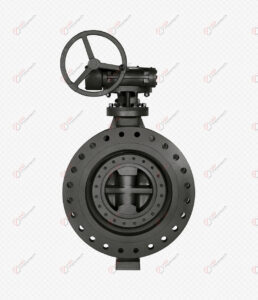
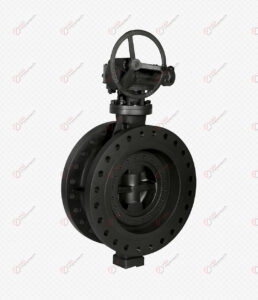
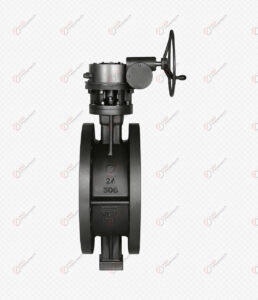
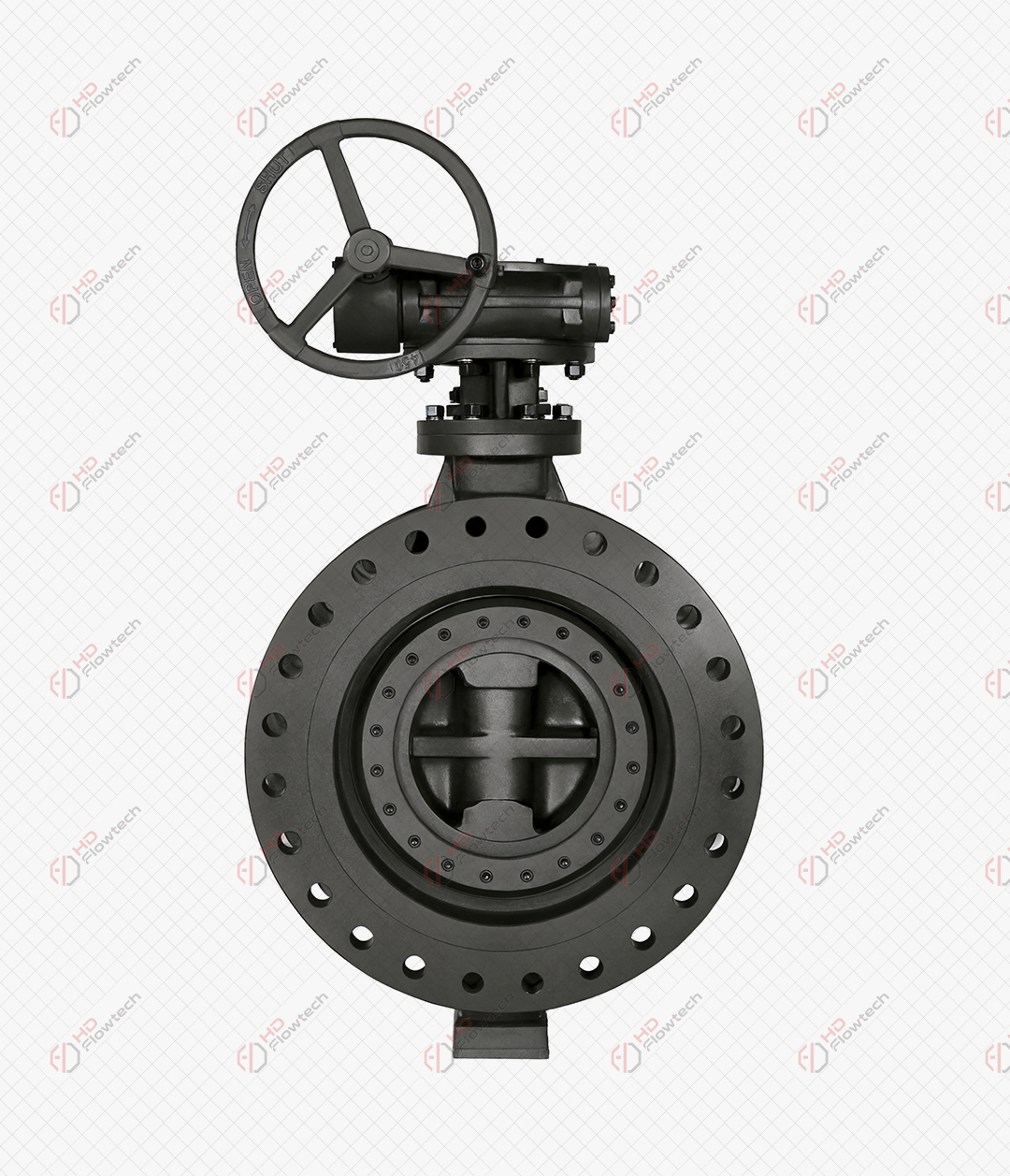
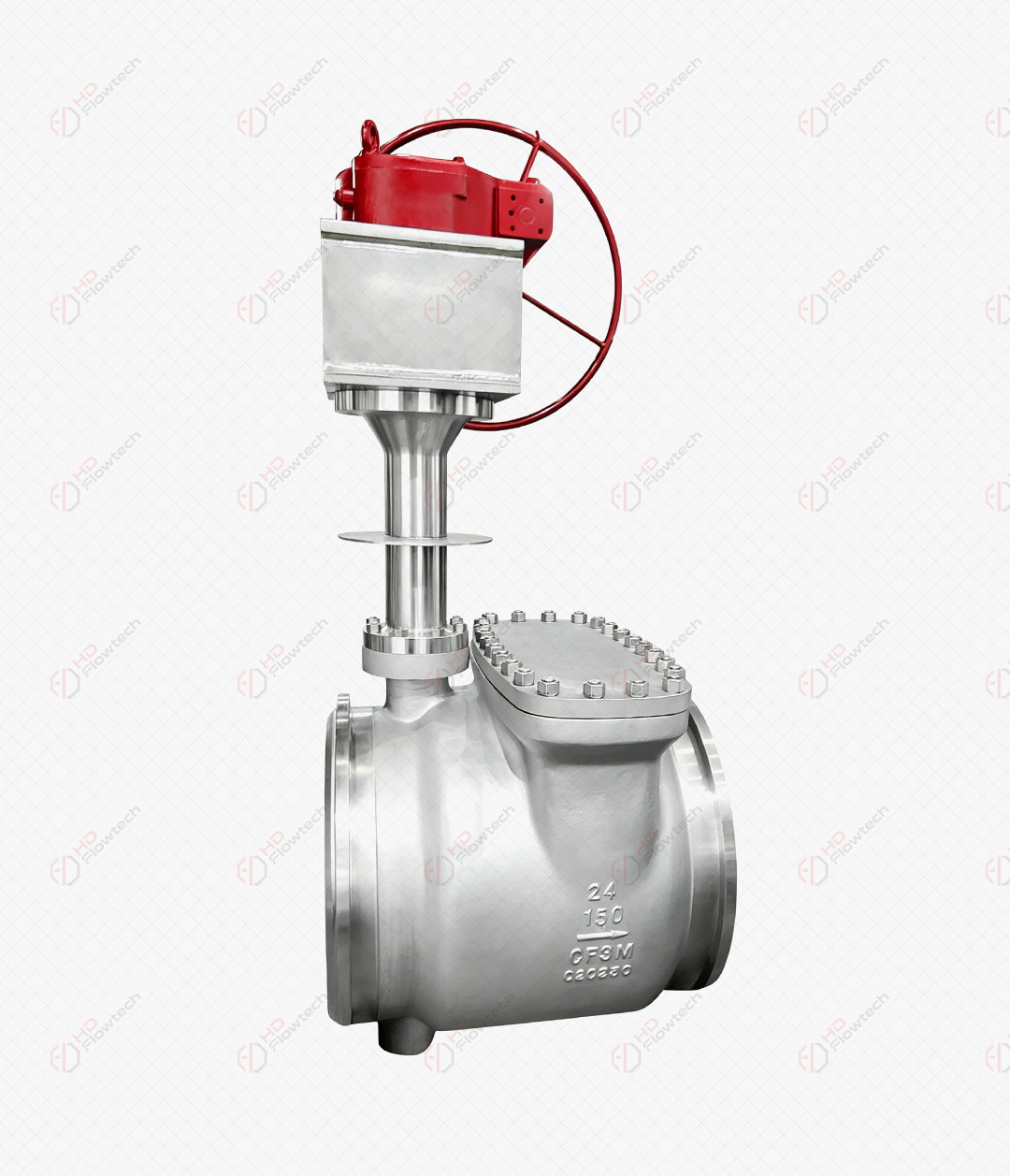
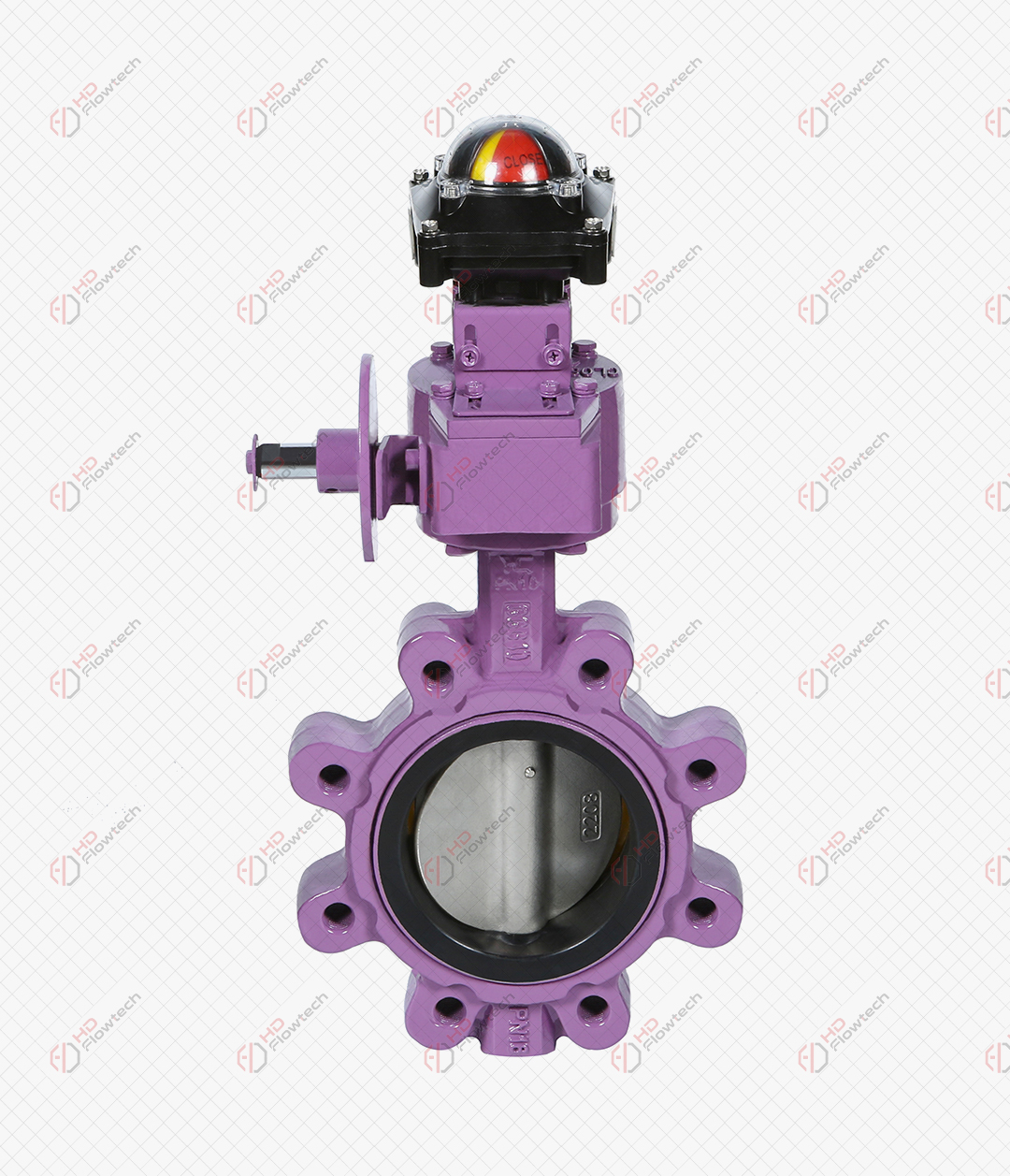
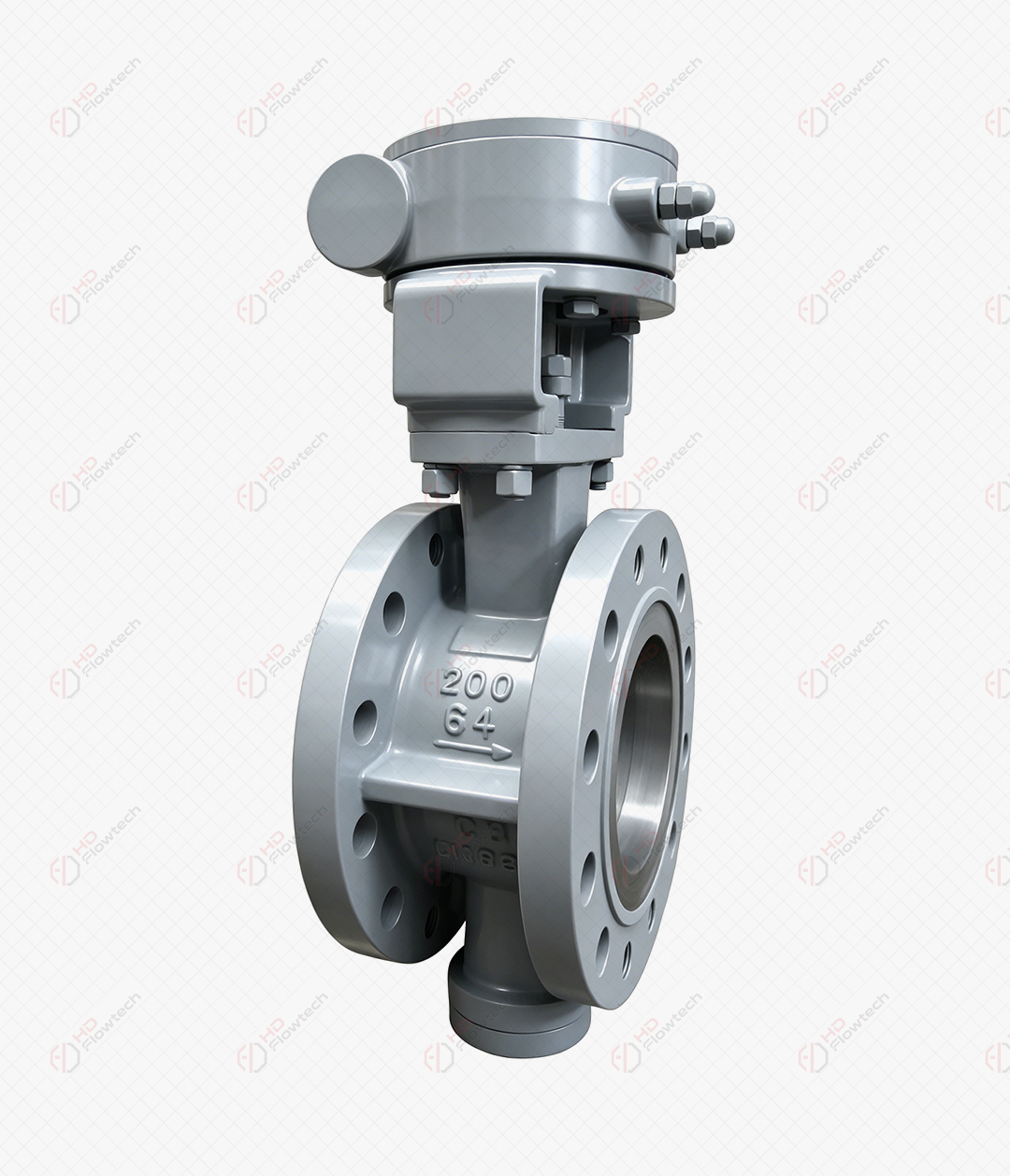
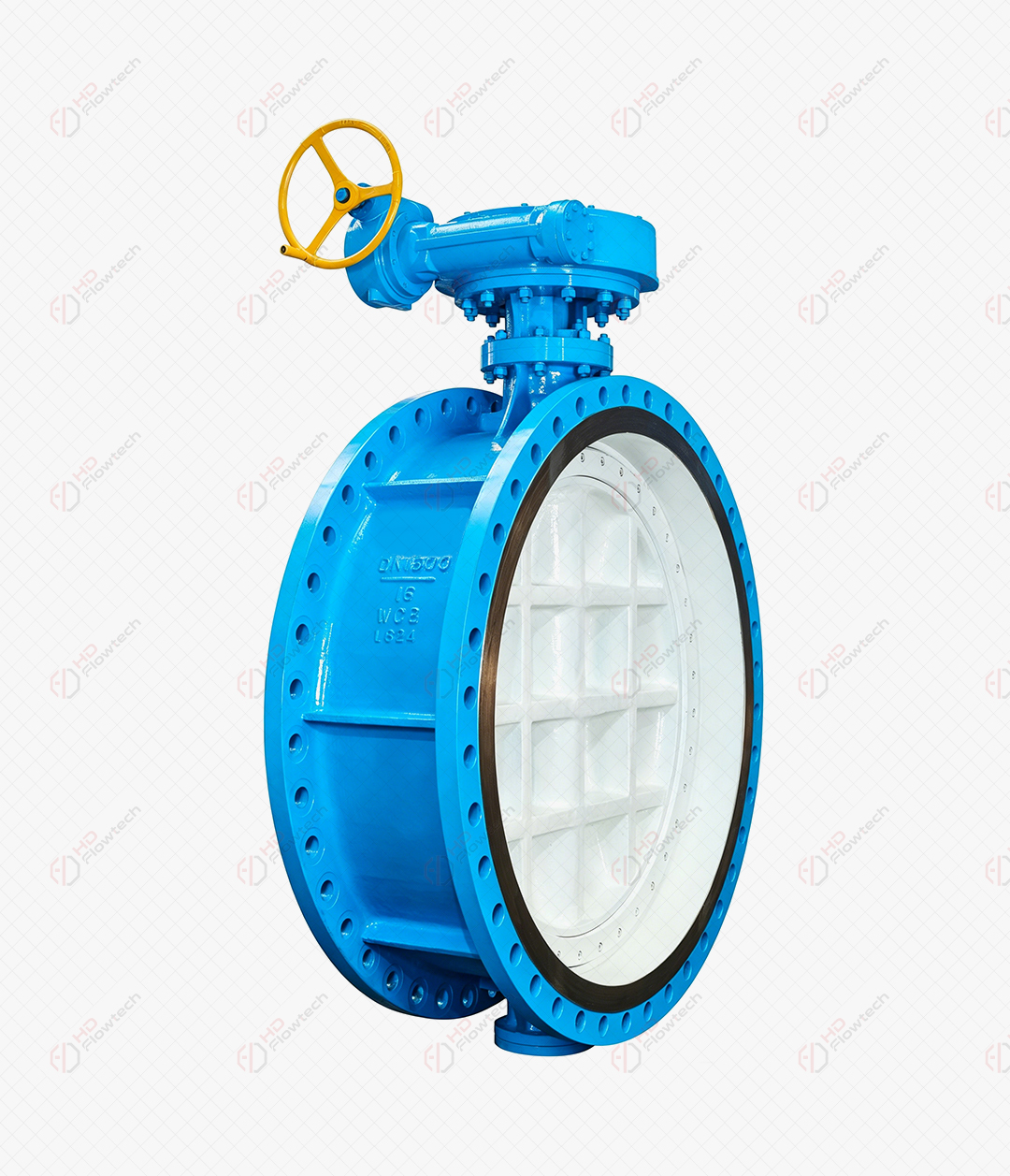
Cast steel triple offset butterfly valves are selected for critical isolation service in large-bore, high-pressure pipeline and process applications where zero leakage, long service life under severe conditions, and resistance to high-temperature and erosive media are required. The triple offset cam-action sealing mechanism differentiates these valves from concentric and double offset designs — eliminating disc-to-seat friction throughout the full operating stroke and providing consistent zero-leakage metal-to-metal shut-off in high-cycle, high-temperature, and critical process service where soft-seated designs would fail prematurely.
Double flanged body construction is standard for large-bore triple offset butterfly valves at DN300 and above, providing structural rigidity and secure flange face integrity under the high operating torques and pipeline loads associated with large-diameter high-pressure service. Metal seats with Stellite or hard-faced overlay are mandatory for triple offset butterfly valves, providing zero-leakage performance at temperatures up to 600°C and resistance to erosion and corrosion in steam, hot oil, and hydrocarbon process service conditions where PTFE and elastomeric seats cannot maintain sealing integrity.
Body material selection follows service temperature and fluid requirements — WCB for standard process service up to 425°C, WC6 for high-temperature steam and process applications up to 600°C, LCB for low-temperature service, and stainless steel (CF8, CF8M) or duplex grades for corrosive and offshore service. Gear operators are standard for large-bore service, with electric, pneumatic, and hydraulic actuators selected for automated control, ESD duty, and remote operation requirements. Design standards API 609 and EN 593 govern triple offset butterfly valve design and performance requirements for critical process and pipeline service.