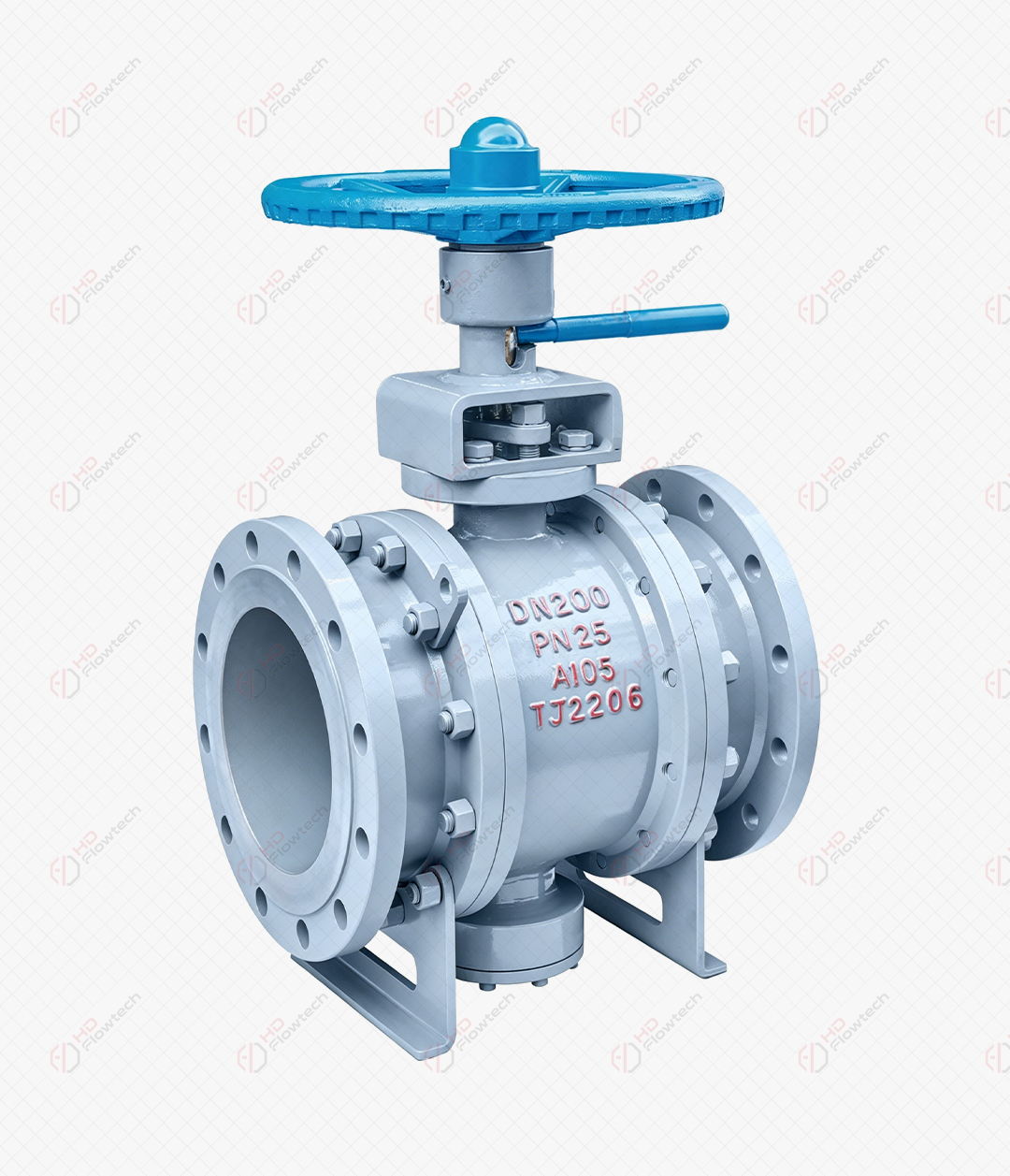
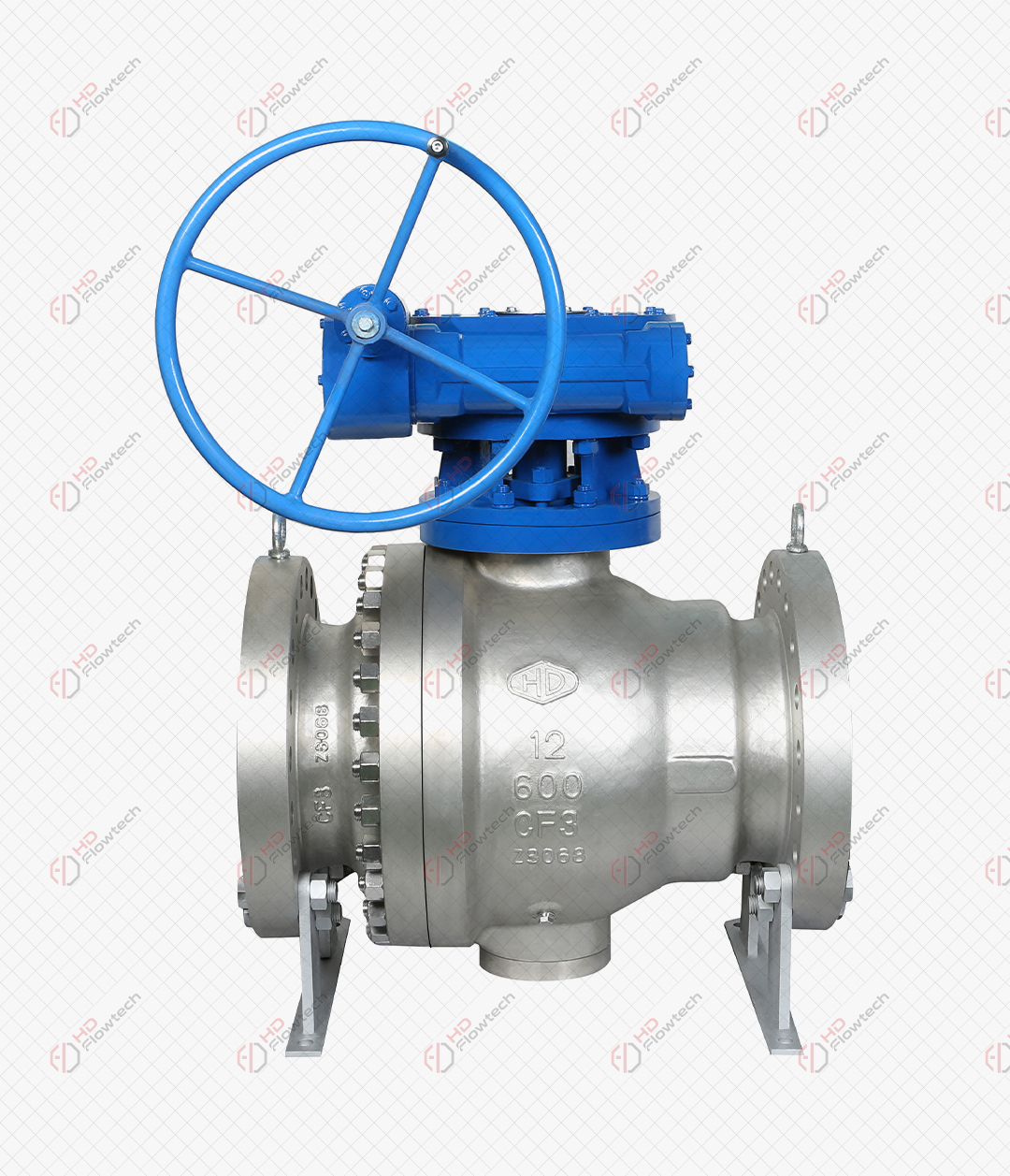
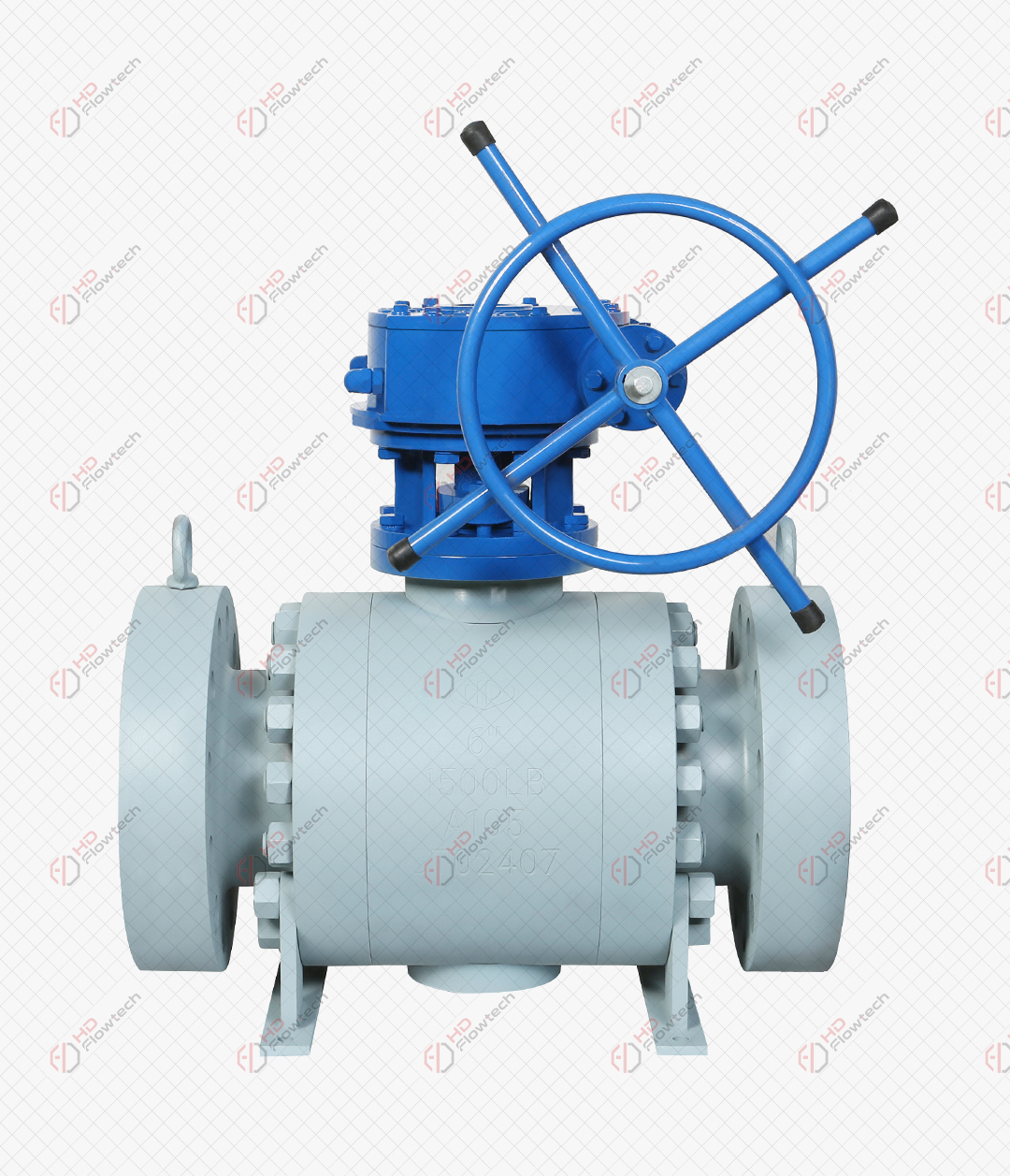
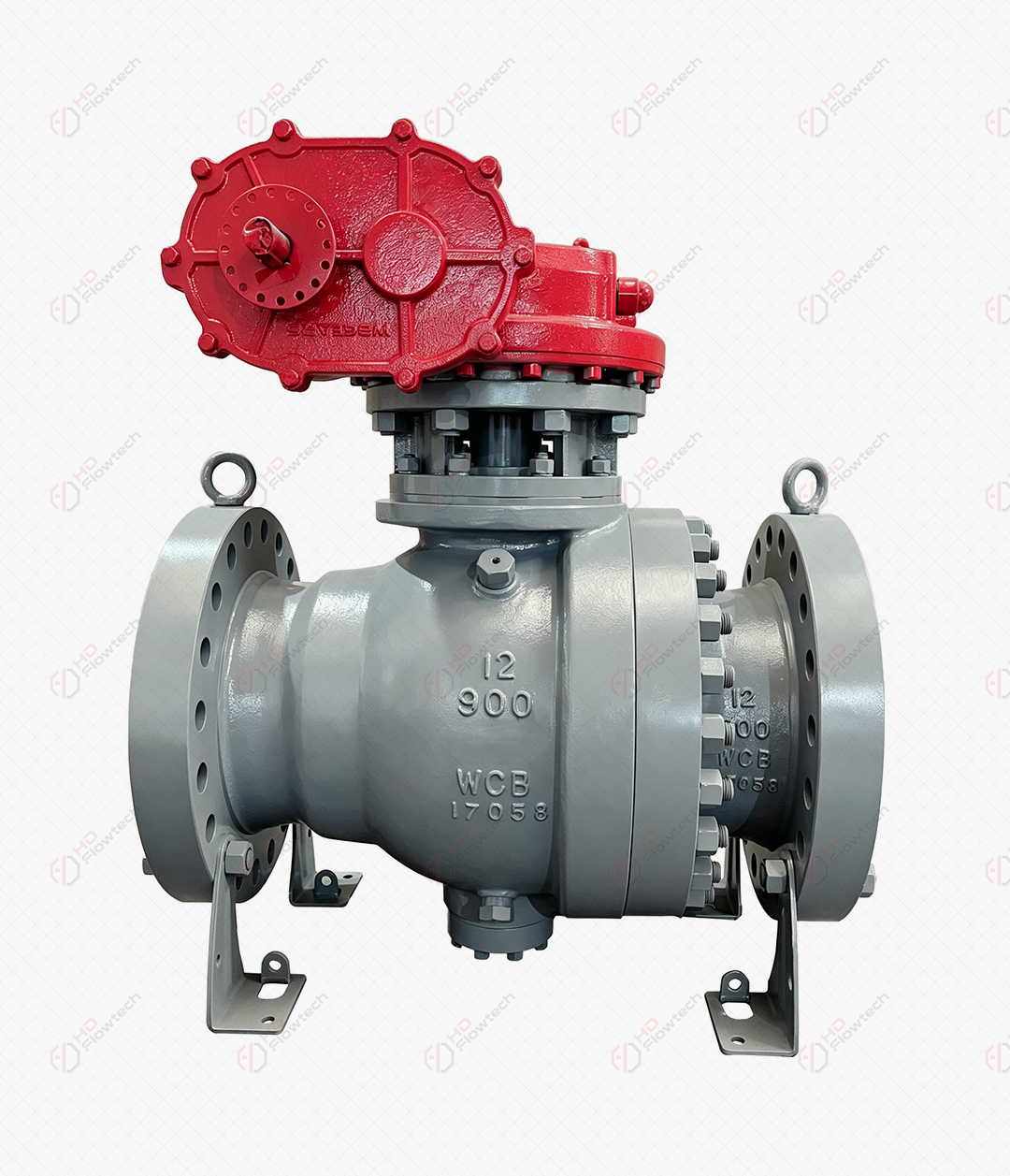
Trunnion mounted ball valves are selected over floating ball designs for larger bore and higher pressure pipeline isolation service where reduced seat load, lower operating torque, and longer seat life are required. The trunnion support transfers differential pressure loads from the seats to the bearings, maintaining consistent sealing performance and low actuation torque throughout the valve’s service life — making trunnion mounted designs the standard specification for process plant isolation, gas distribution networks, and pipeline sectioning valves at DN150 and above.
Spring-loaded seats provide bidirectional sealing and automatic cavity pressure relief, preventing over-pressurization of the valve body cavity under thermal expansion of trapped fluid — a critical safety feature for hydrocarbon and process pipeline service. Full-bore design ensures unrestricted flow and pigging tool compatibility for inline inspection and cleaning operations without valve removal. Locking devices are commonly specified for pipeline sectioning and safety-critical isolation points where valve position must be secured against unauthorized operation.
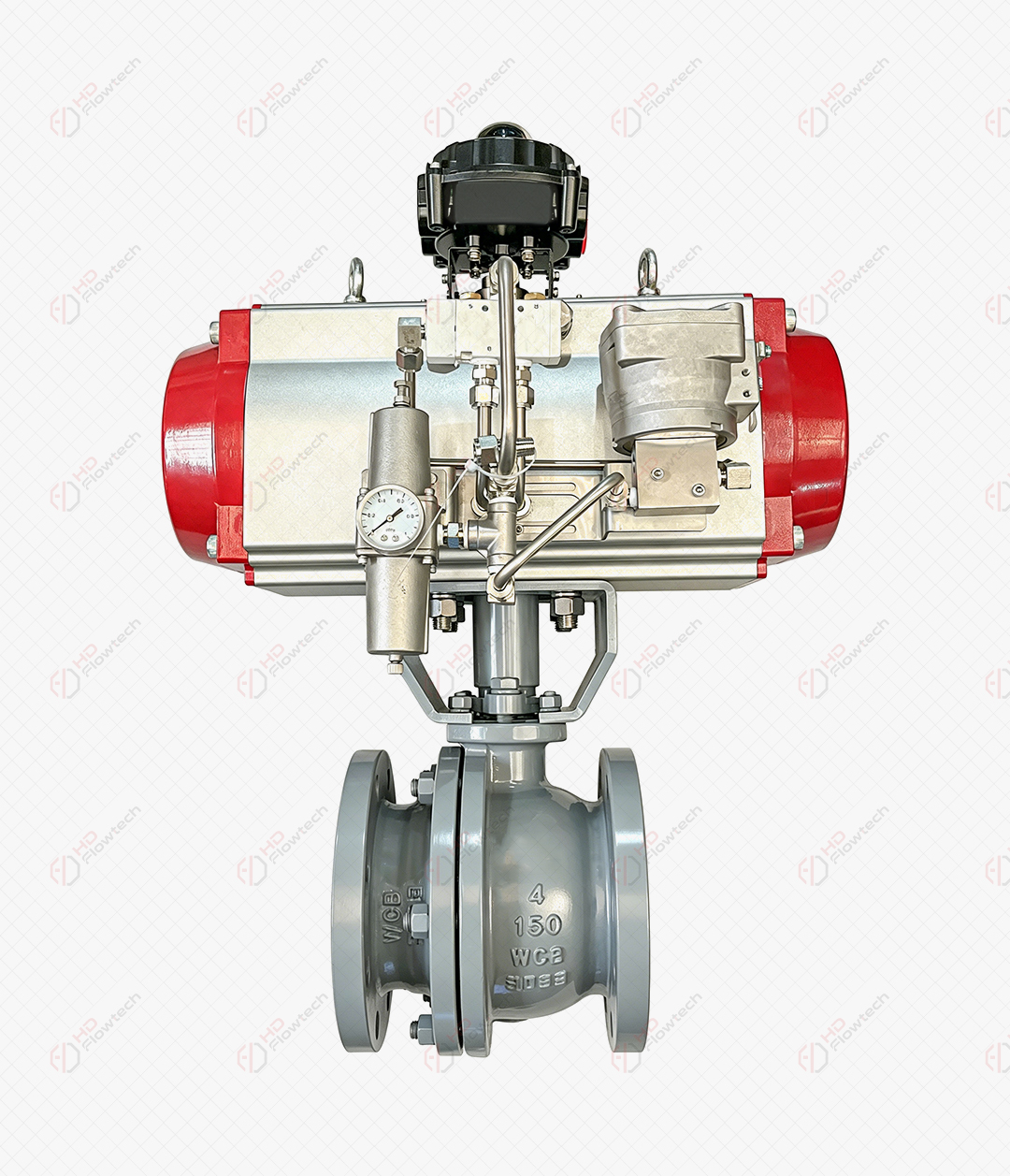
Body material selection follows standard ball valve criteria — carbon steel (A105, WCB) for general process and pipeline service up to 425°C, low-temperature grades (LCB) for cold climate service, stainless steel (CF8M) for corrosive media, and duplex grades for sour gas and offshore environments. Handwheel operation is standard for smaller sizes and low-cycle applications, with gear operators and actuators selected for larger bore valves and automated isolation duty. Design standard API 6D governs trunnion mounted ball valves for pipeline service, with ASME B16.34 applying for pressure-temperature ratings across all material grades.