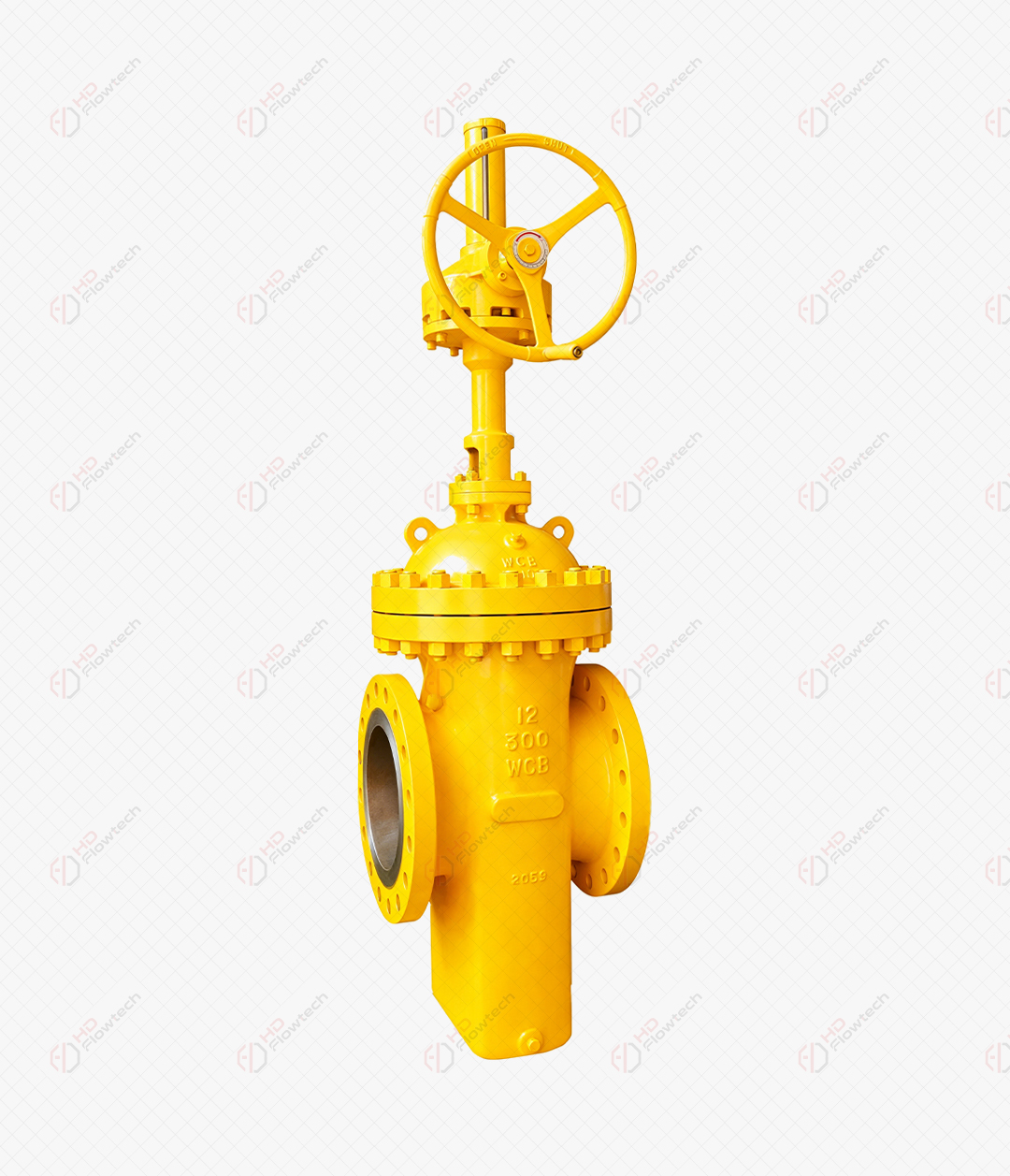
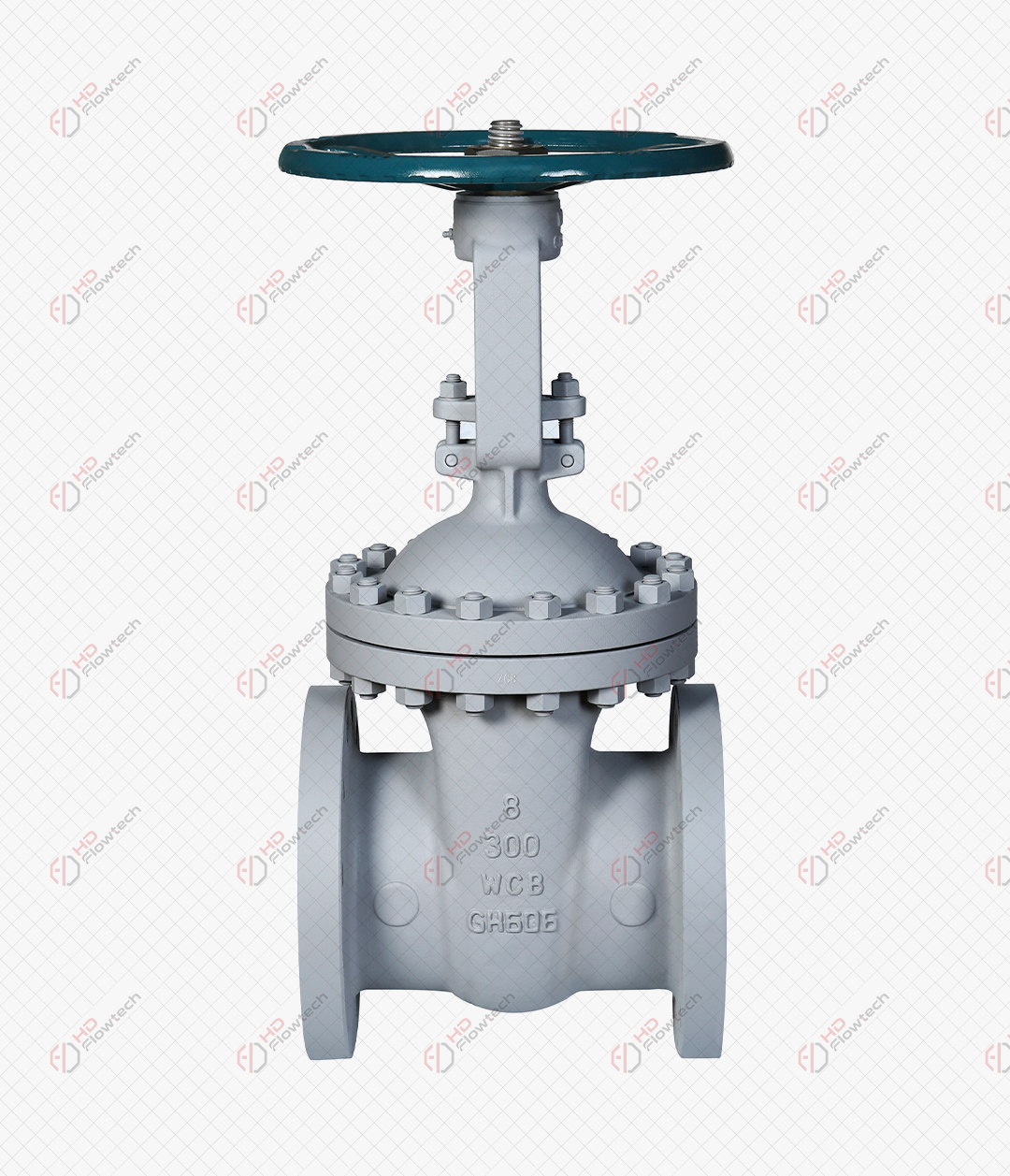
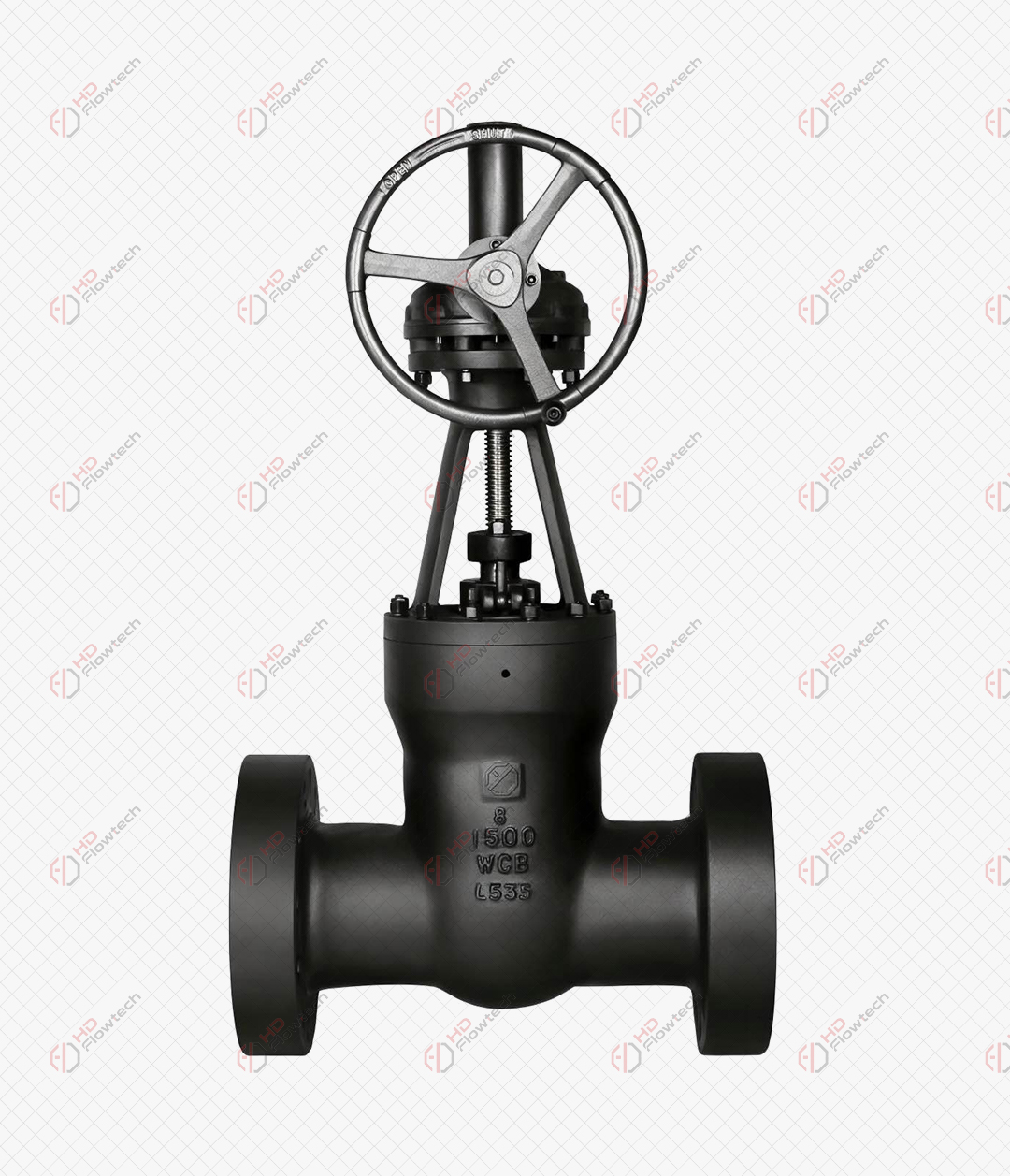
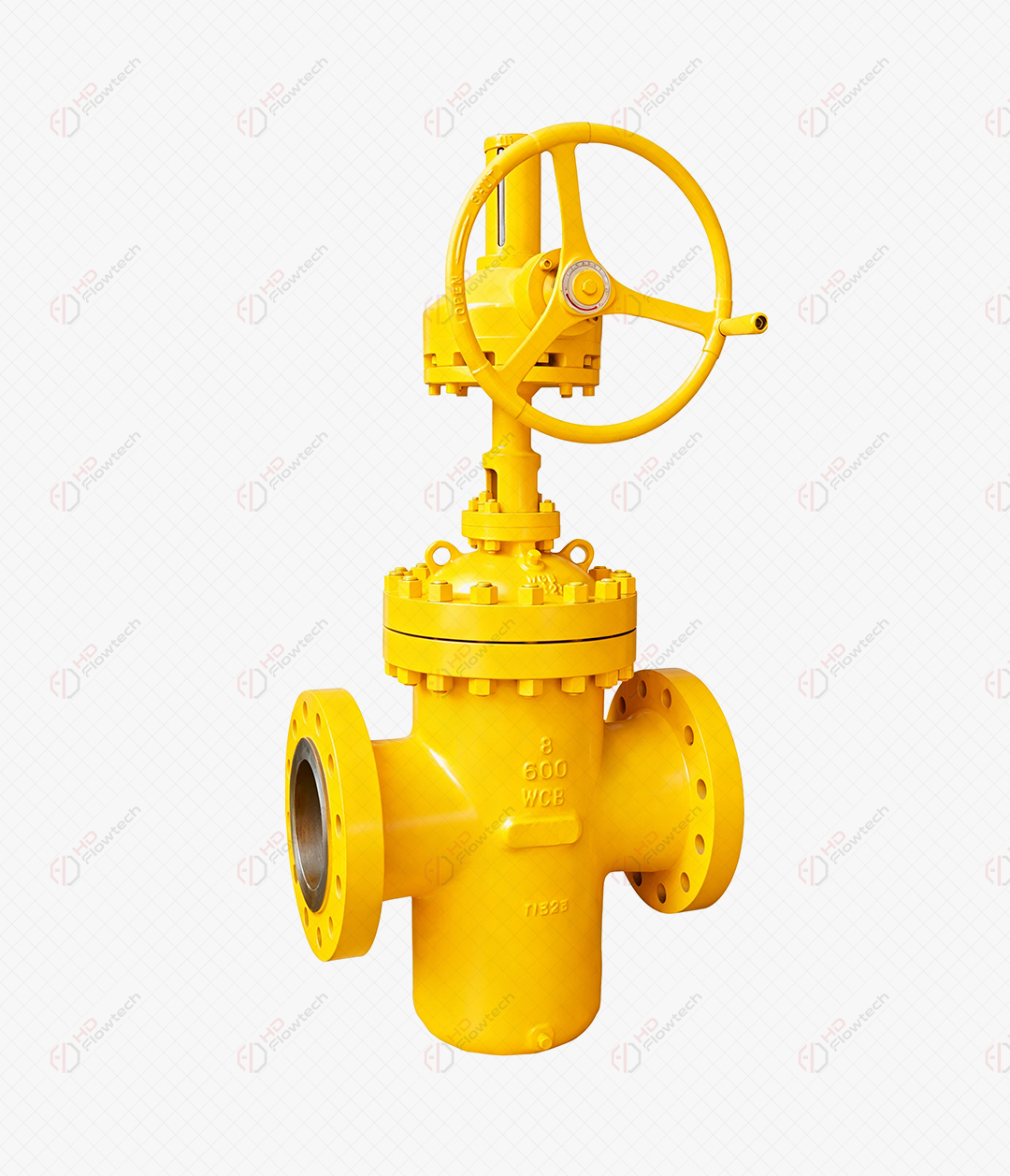
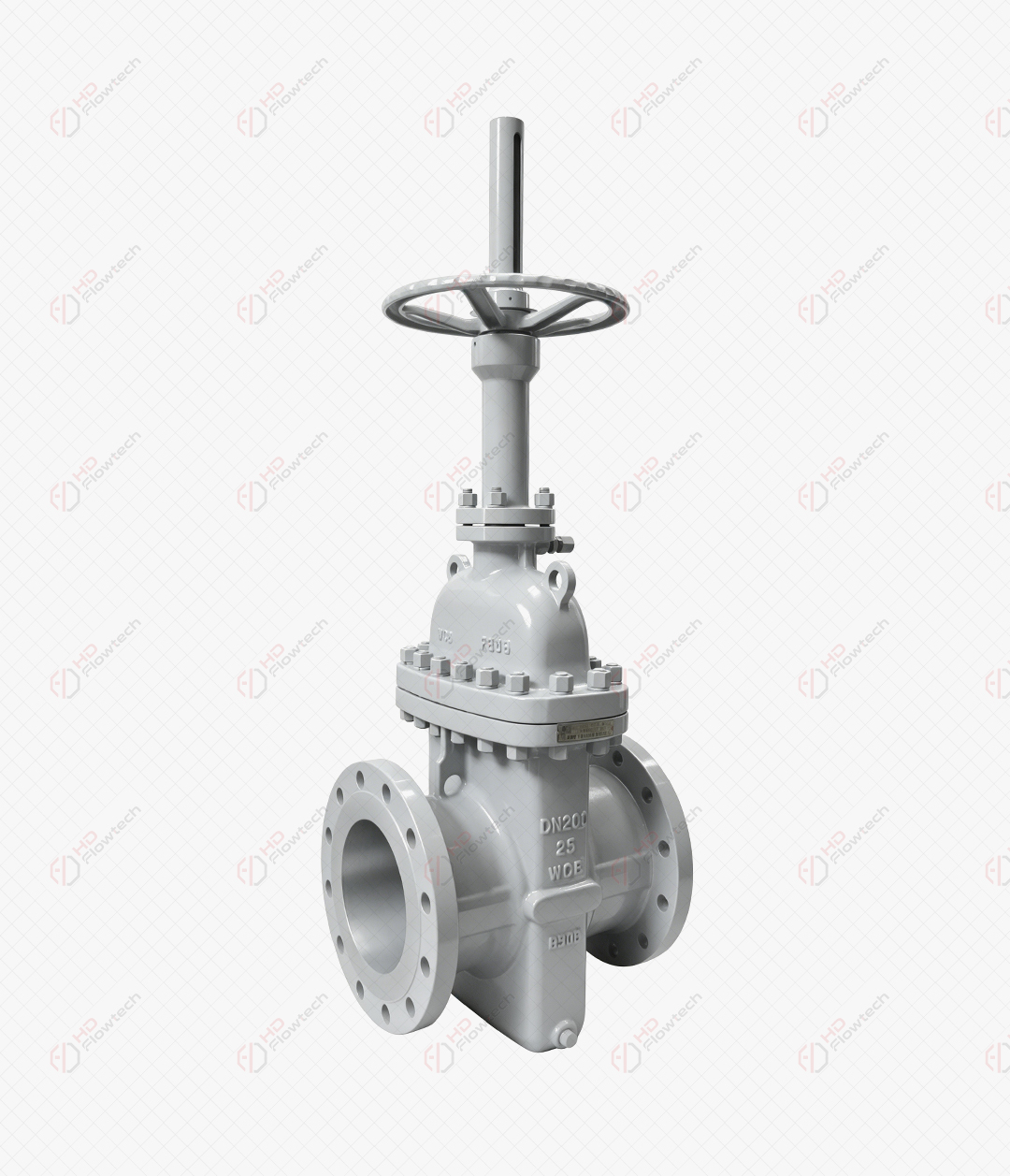
Gate valves are selected for full-bore pipeline isolation service where unrestricted flow, minimal pressure drop, and pigging compatibility are required. The full-bore design places the wedge disc completely outside the flow path in the open position, allowing inline cleaning and inspection tools to pass through without obstruction — making cast steel gate valves the standard specification for natural gas transmission mains, distribution pipelines, and compressor station isolation duty. Gate valves are not suitable for throttling or flow regulation service.
Cast steel body construction (WCB, WC6, WC9) covers Class 150–300 service across a wide temperature range, providing a cost-effective and proven solution for large-bore gas pipeline and general process applications. Bolted bonnet designs are standard for Class 150–300, allowing internal access for seat inspection and maintenance without removing the valve from the pipeline. Rising stem configuration provides clear visual open/closed position indication, critical for field operators managing large-diameter pipeline isolation points.
Yellow epoxy coating is the standard surface treatment for natural gas pipeline service, providing corrosion protection for above-ground and buried installations in compliance with gas industry coating specifications. Gear operators are selected for larger bore sizes where manual handwheel torque becomes impractical, ensuring reliable low-effort actuation throughout the valve’s service life. Body material selection — carbon steel (WCB) for standard service up to 425°C and alloy steel (WC6, WC9) for high-temperature applications — is determined by operating temperature and fluid service requirements.