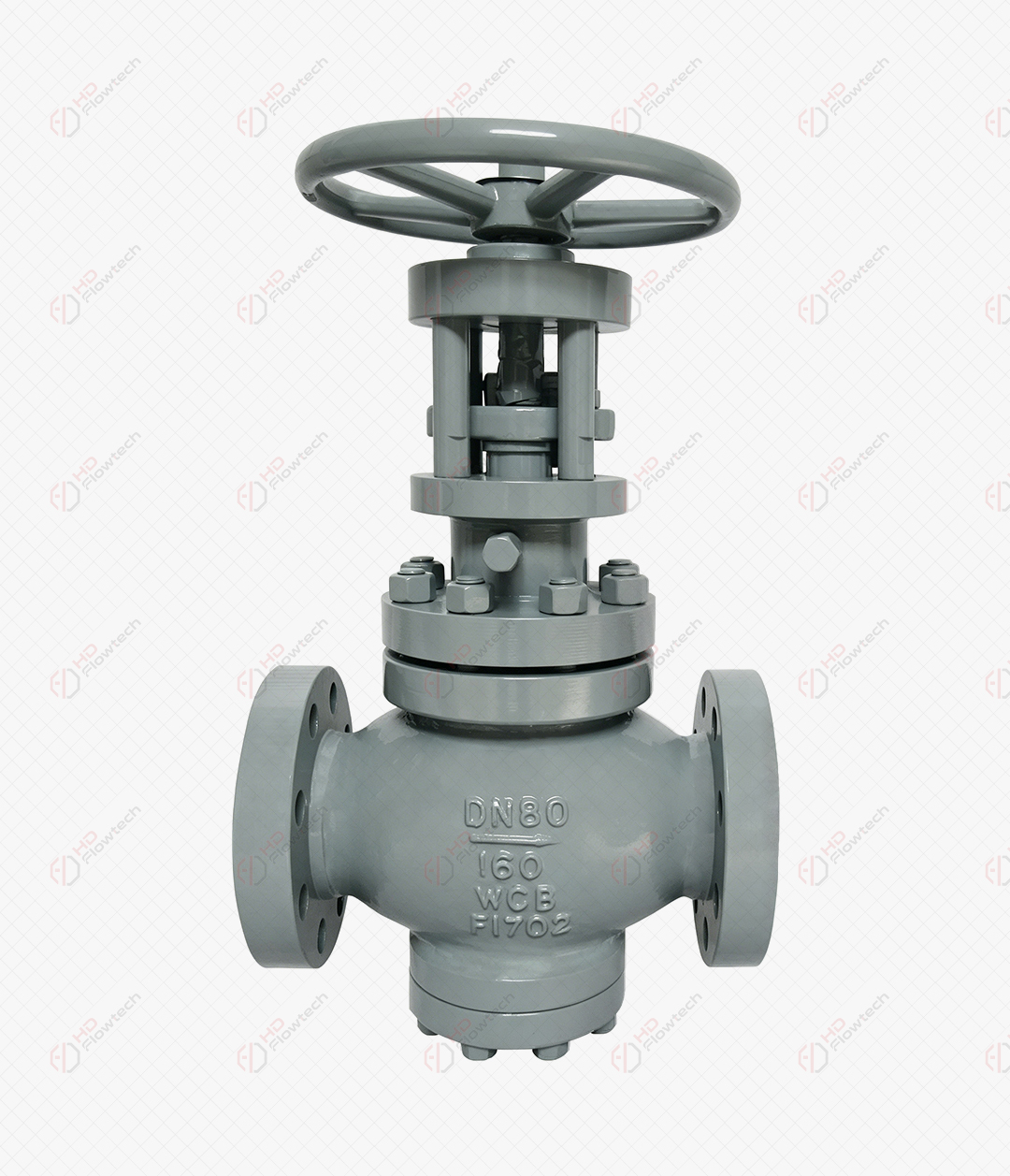
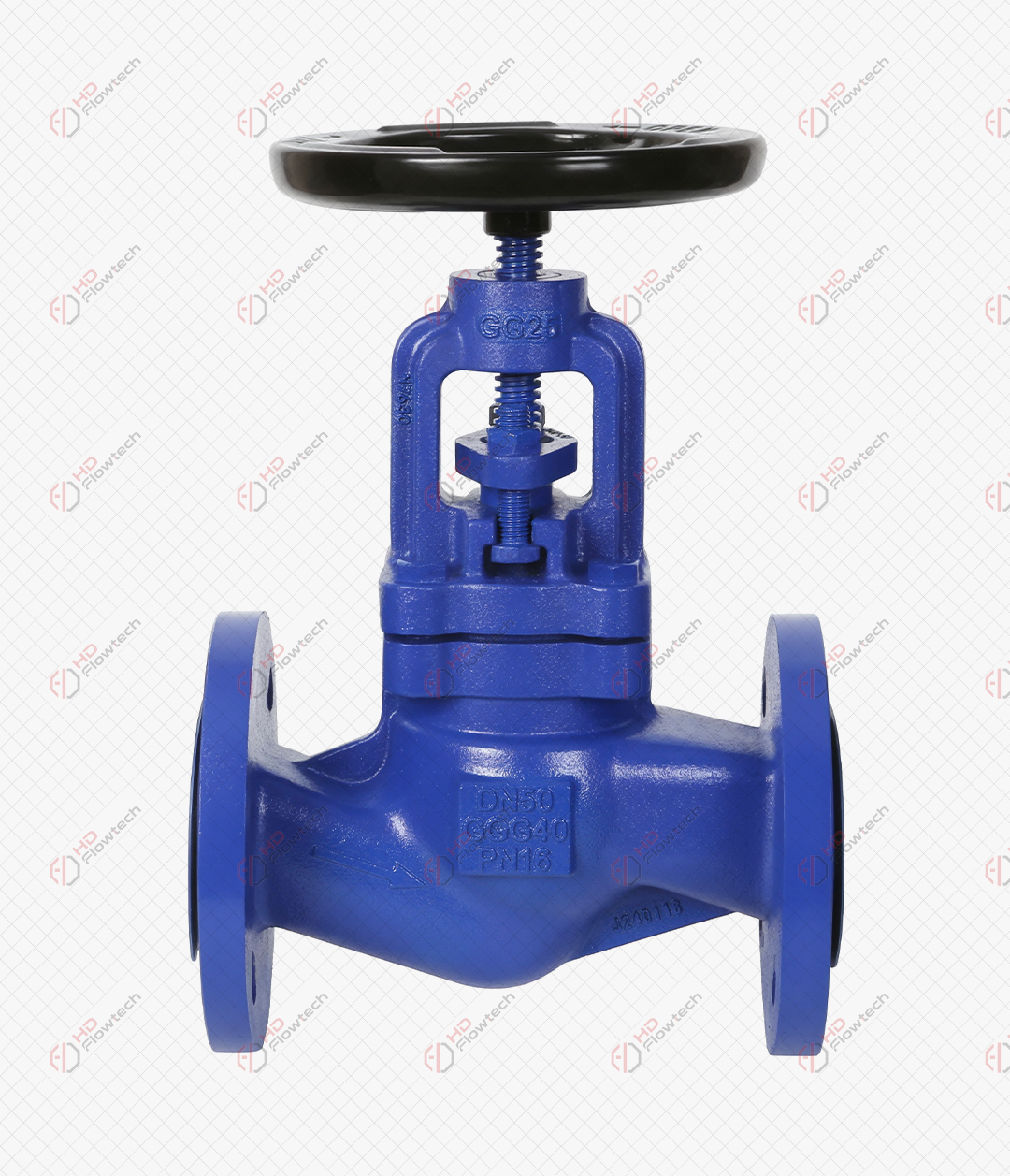
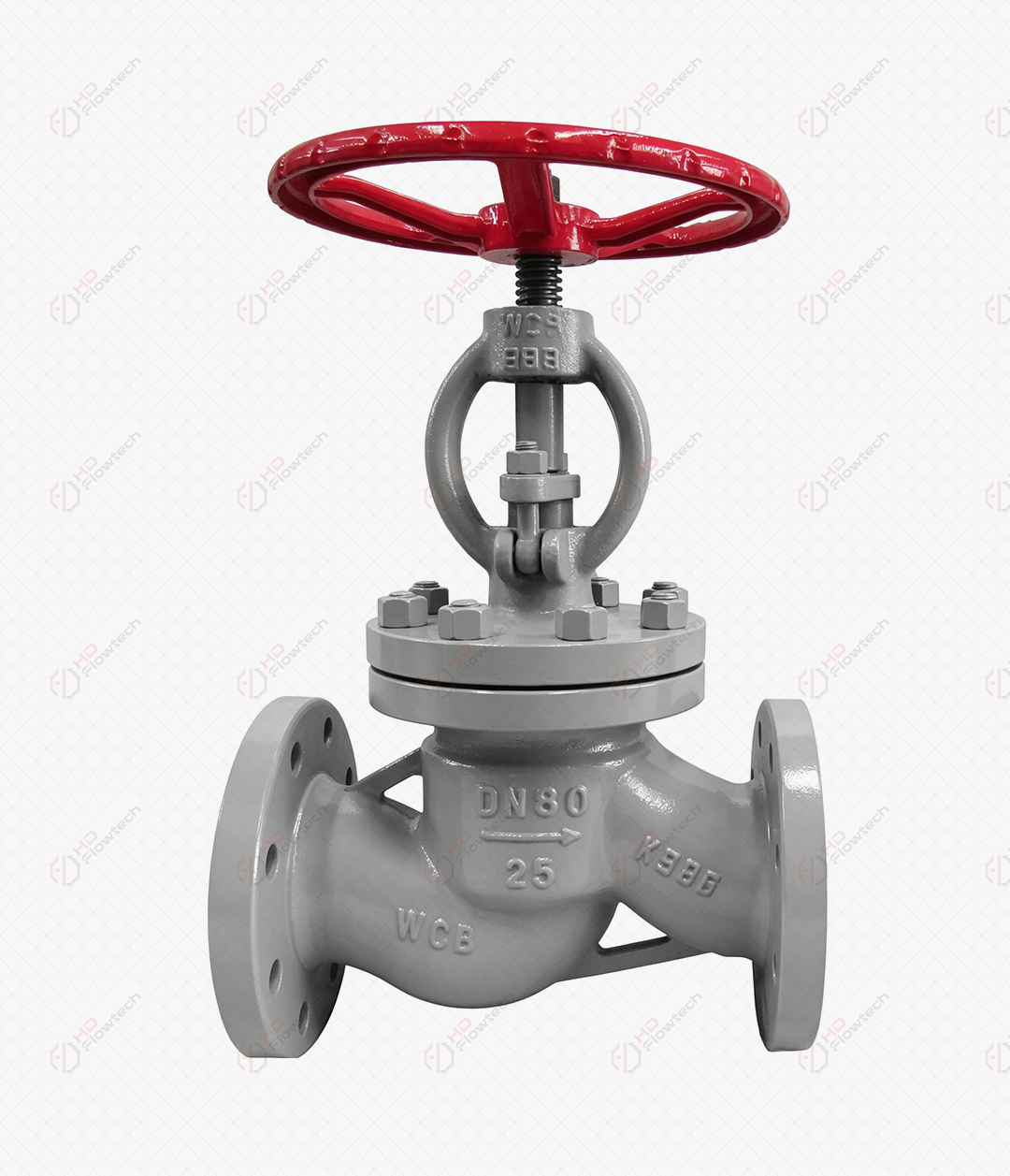
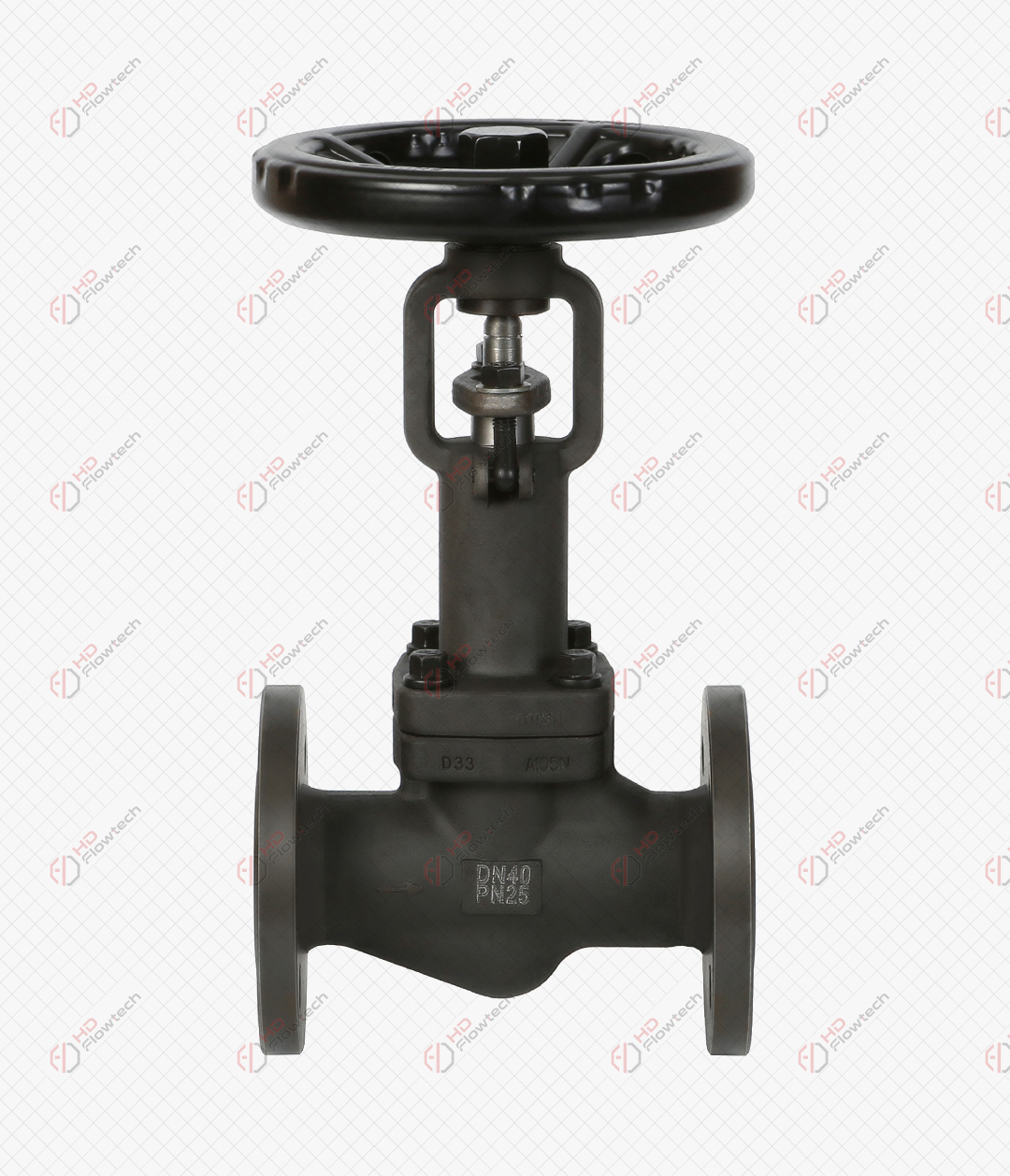
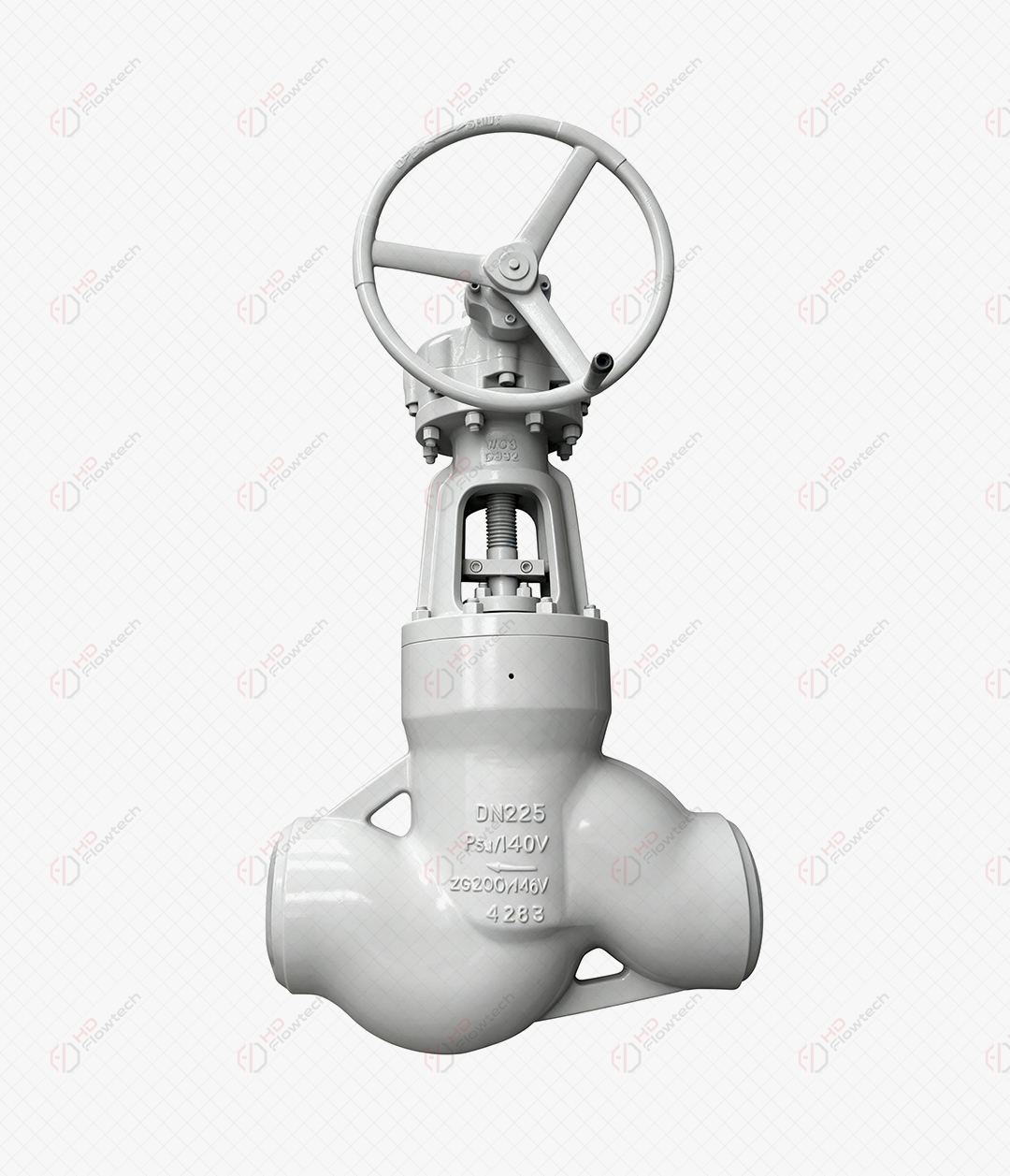
Cast steel globe valves at Class 600 and above are selected for isolation and throttling service in high-pressure steam, boiler feed water, and critical process applications where precise flow regulation and tight shut-off under elevated differential pressure are required. The pressure seal bonnet construction differentiates high-pressure globe valves from bolted bonnet designs — providing bonnet joint integrity that scales with internal pressure, making them the standard specification for power generation steam systems, petrochemical high-pressure process lines, and boiler feed water control service.
Stellite-overlaid seats and discs are standard for high-pressure steam and erosive service, providing resistance to wire drawing, erosion, and galling under high-velocity flow conditions that would rapidly degrade soft or unprotected metal seats. Rising stem configuration is essential for throttling applications, providing repeatable stem travel and consistent flow control across the full operating range — a critical requirement for steam conditioning, pressure letdown, and flow balancing duty in high-pressure process systems.
Body material selection follows service temperature requirements — carbon steel (WCB) for standard high-pressure service up to 425°C, alloy steel (WC6, WC9) for high-temperature steam and process applications up to 600°C, and stainless steel (CF8, CF8M) for corrosive process service. Design standards ASME B16.34, BS 1873, and API 623 govern pressure-temperature ratings and material requirements for cast steel globe valves in high-pressure process and steam service.