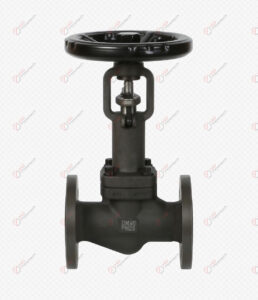
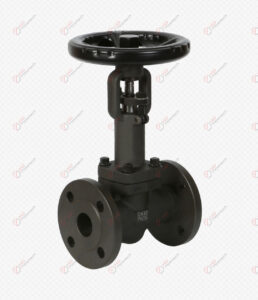
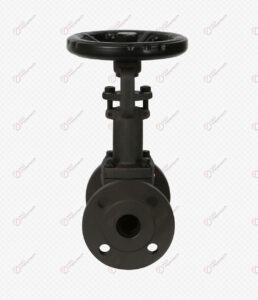
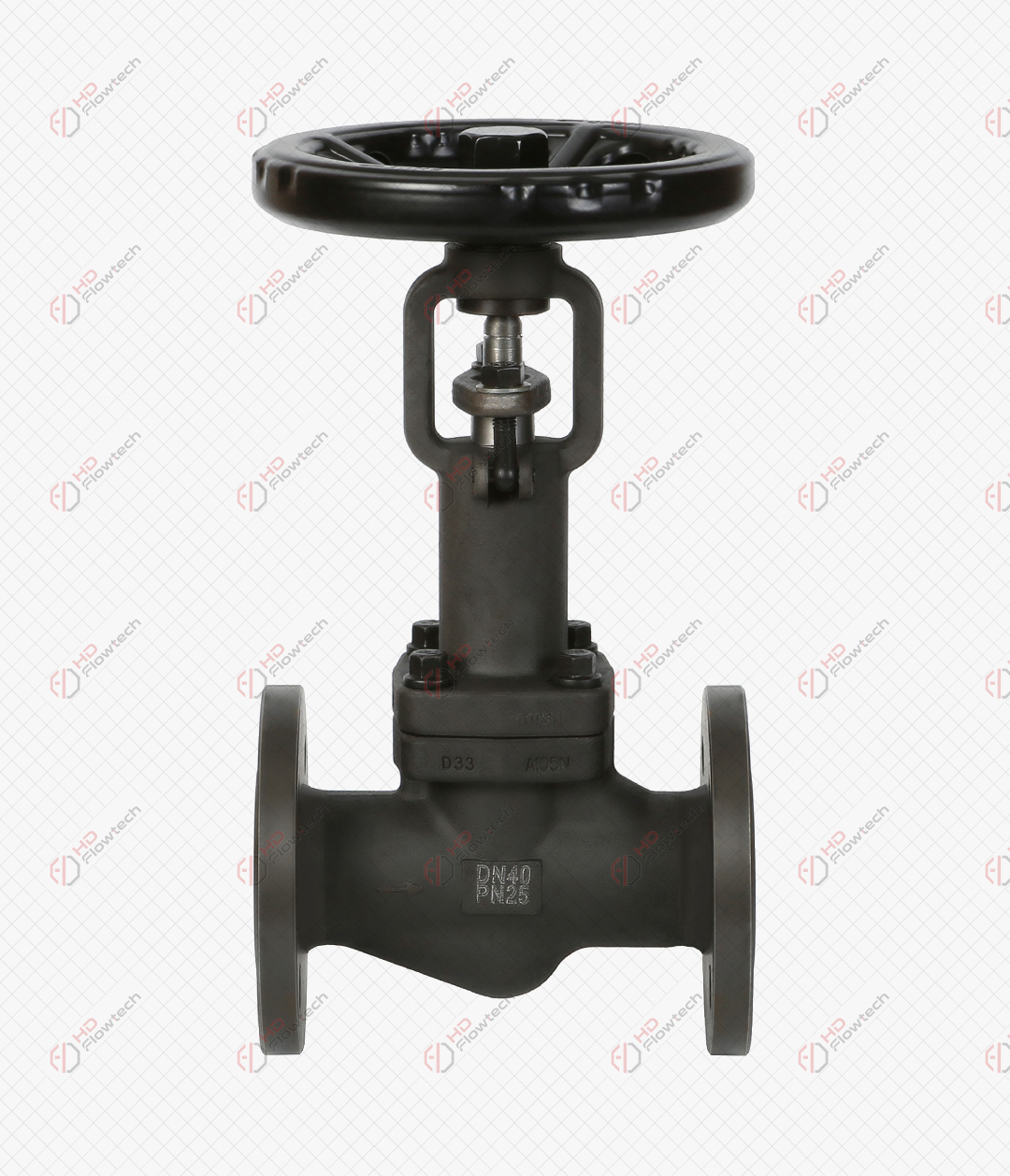
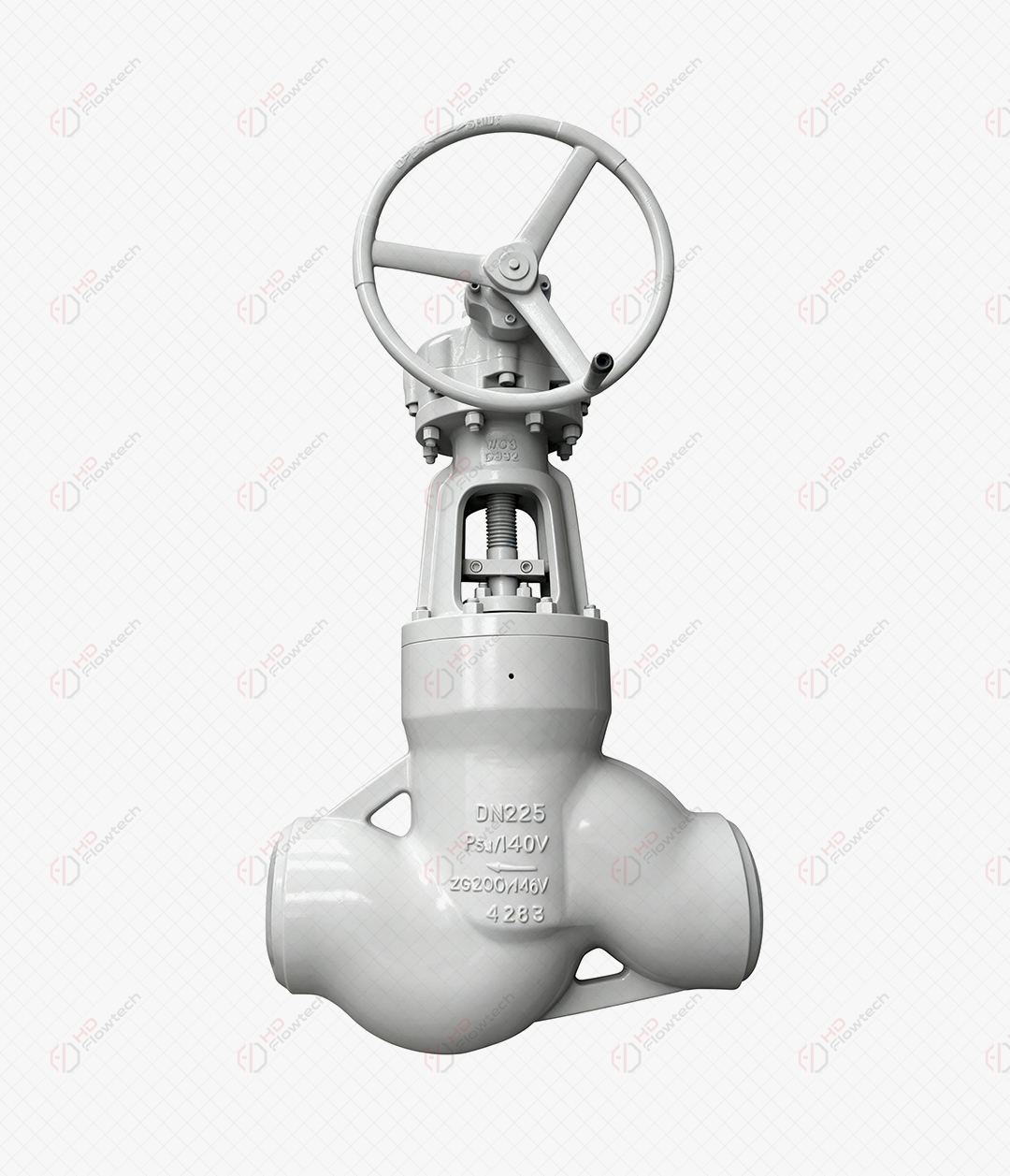
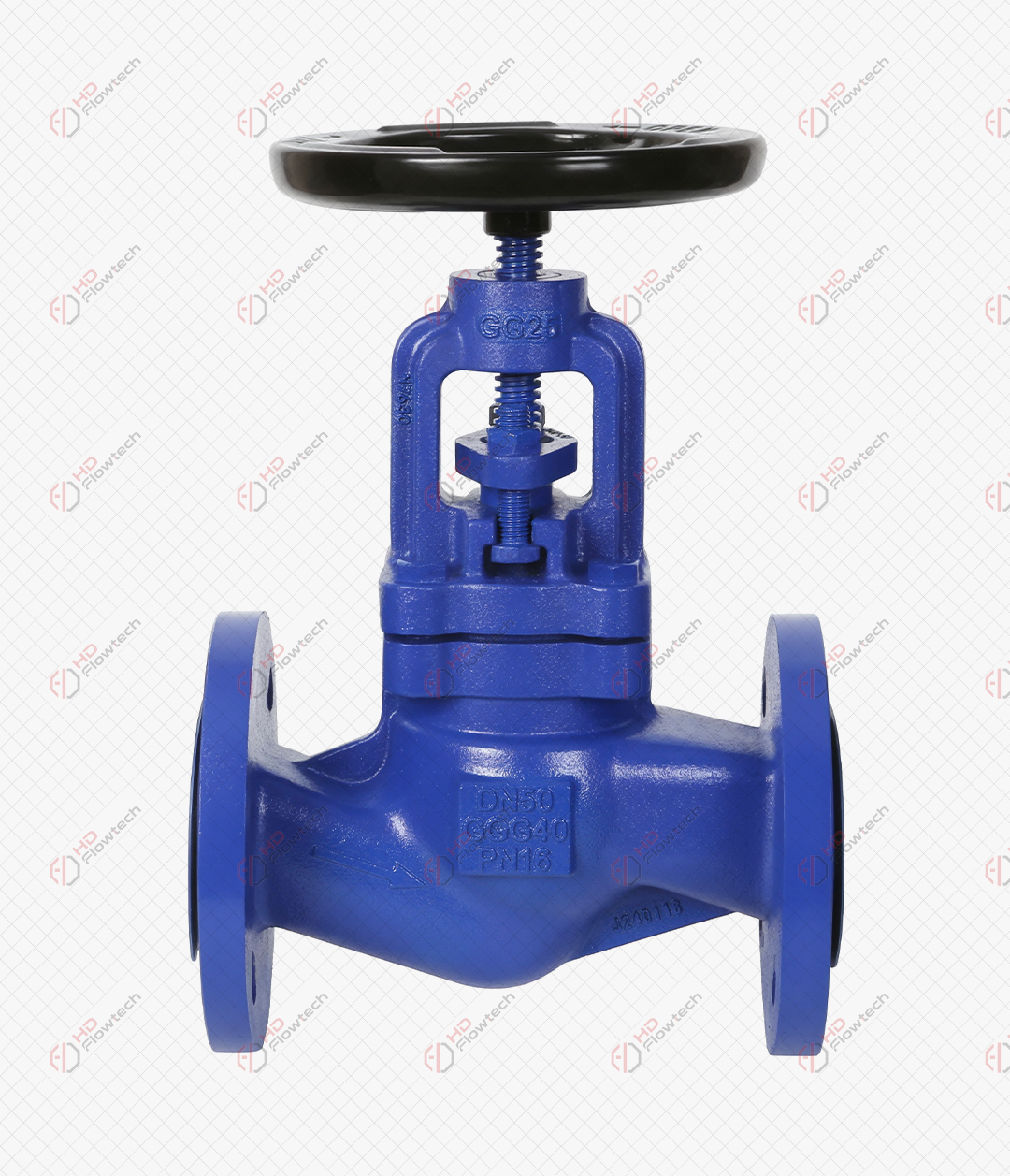
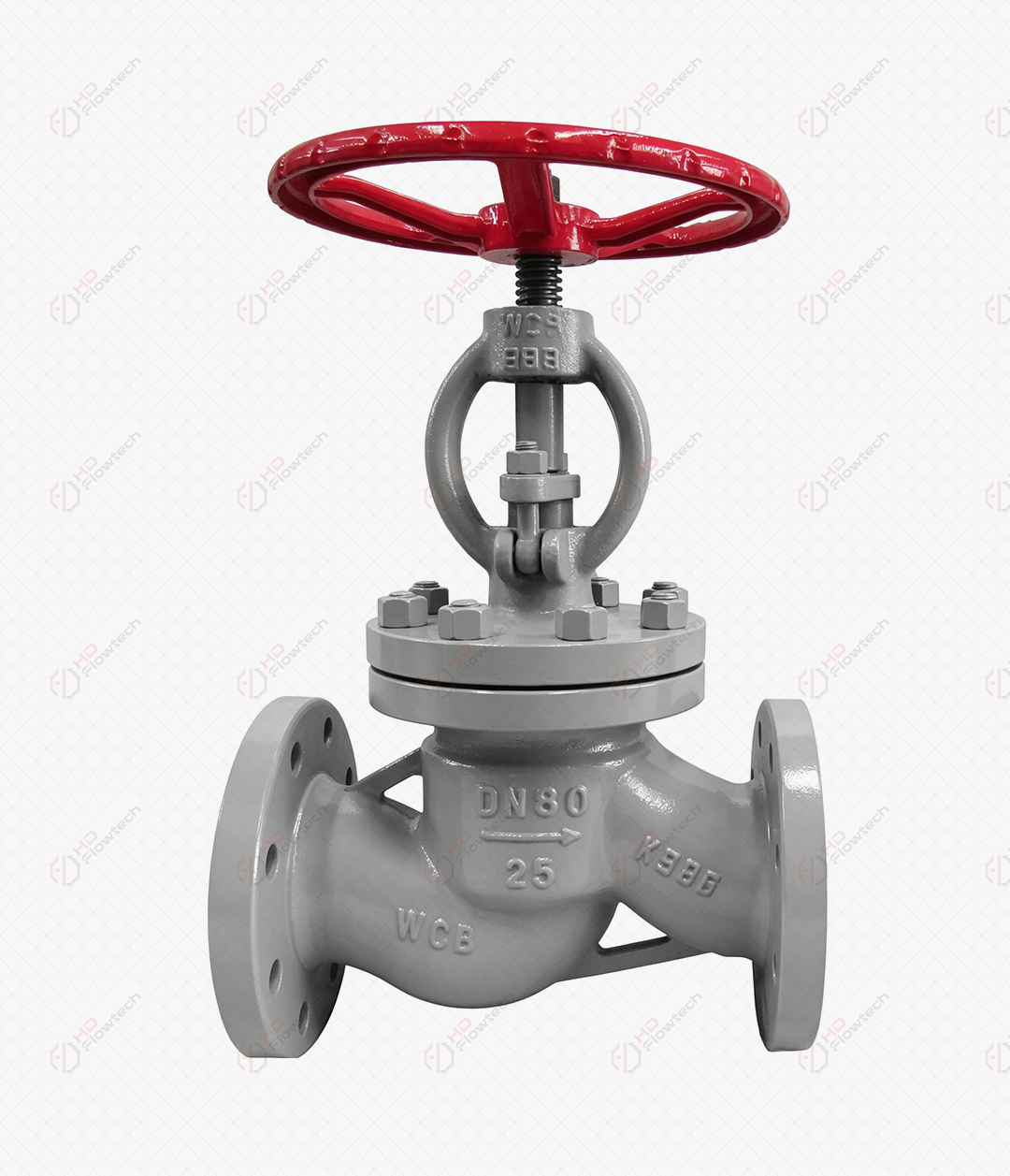
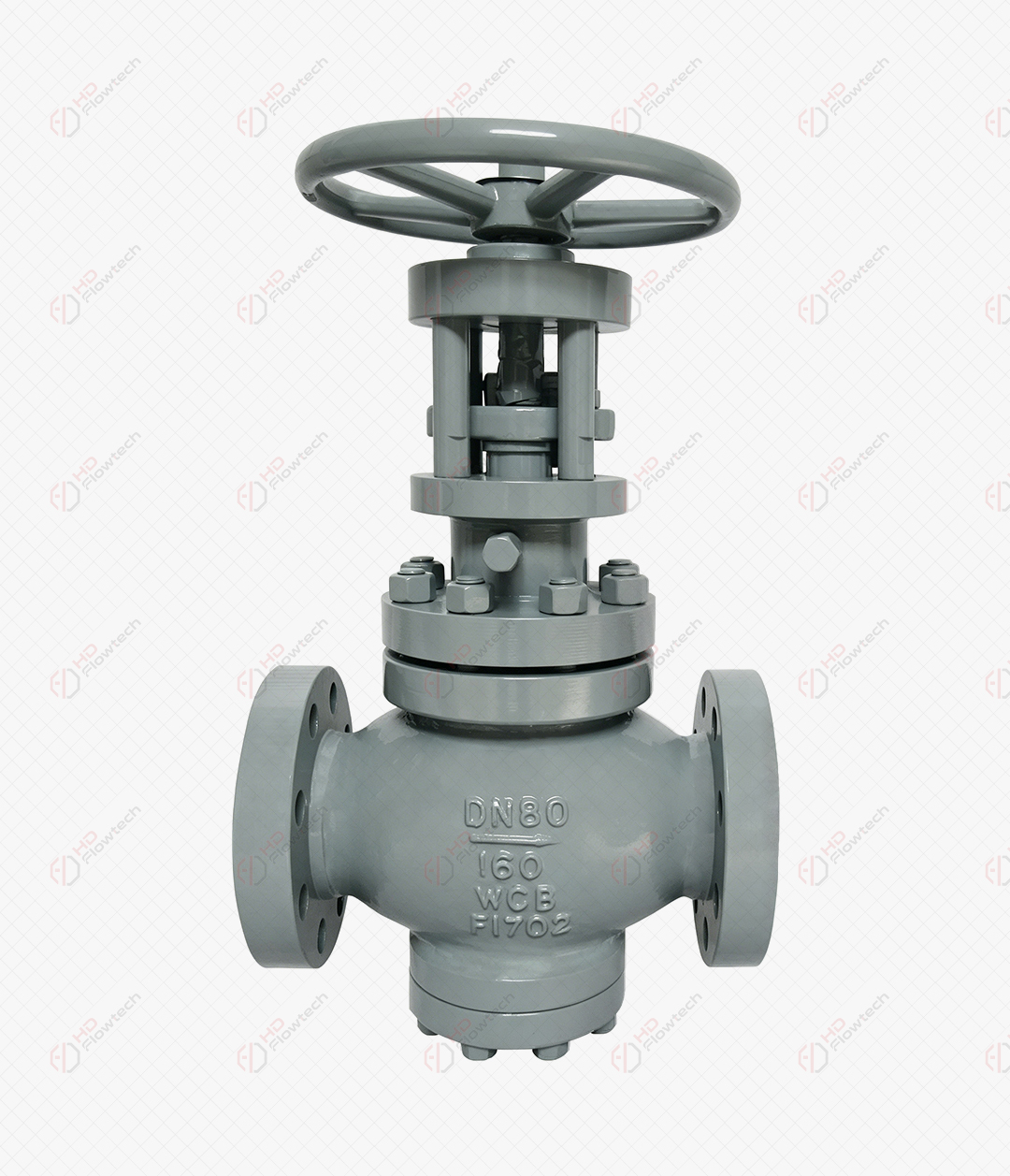
Forged steel globe valves are selected for isolation and throttling service in small-bore, high-pressure, and high-temperature process applications where cast steel body construction is not suitable due to pressure class, material consistency, or thermal cycling requirements. The forged body eliminates casting porosity and internal defects, providing consistent mechanical properties and superior fatigue resistance under cyclic thermal and pressure loading — critical for small-bore steam, boiler feed water, and high-pressure hydrocarbon service.
Carbon steel (A105N) forged globe valves cover standard process service up to 425°C at Class 150–1500, providing a cost-effective forged body solution for general process plant, utility steam, and instrument isolation applications. The open yoke construction is standard for small-bore forged globe valves, providing stem and packing visibility for in-service condition monitoring without requiring valve removal from the pipeline. Bolted bonnet designs are standard for Class 150–600, with pressure seal bonnet construction required for Class 900 and above.
Body material selection follows service temperature and fluid compatibility requirements — A105N for standard carbon steel service, F11 and F22 alloy steel for high-temperature steam applications up to 600°C, and F304 / F316 stainless steel for corrosive process media. Seat material selection — Stellite overlay for high-temperature and erosive service, PTFE for chemical and low-temperature applications, and SS316 for general corrosion-resistant duty — is determined by fluid type, temperature, and flow velocity. Design standards API 602 and ASME B16.34 govern forged steel globe valves for small-bore process and high-pressure service across all material grades.