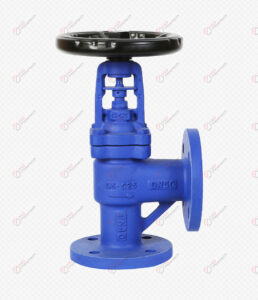
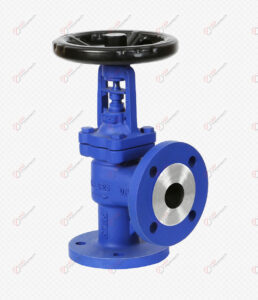
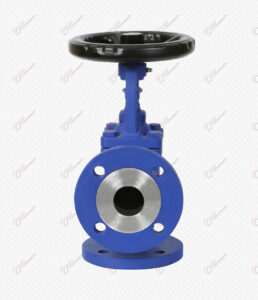
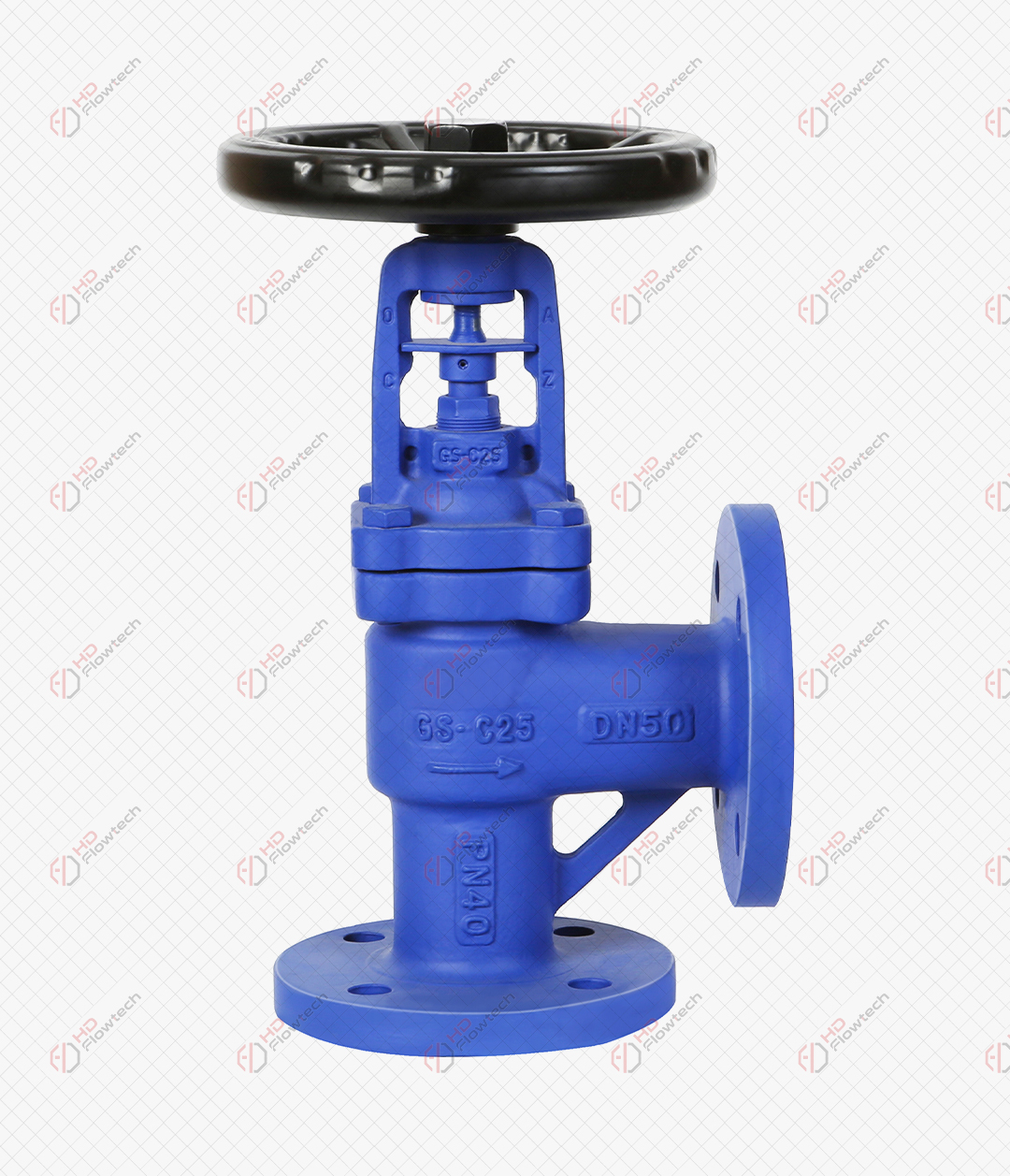
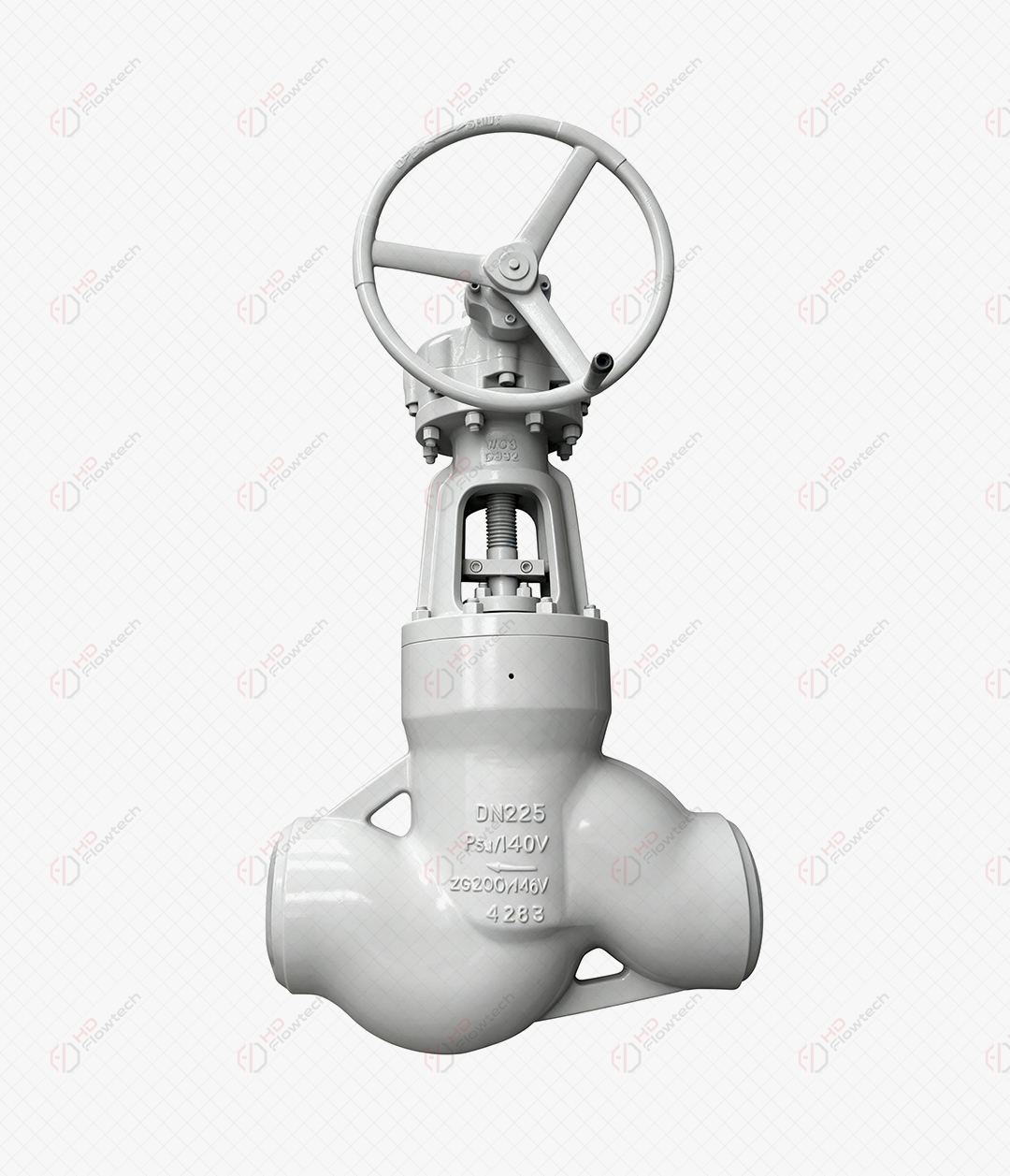
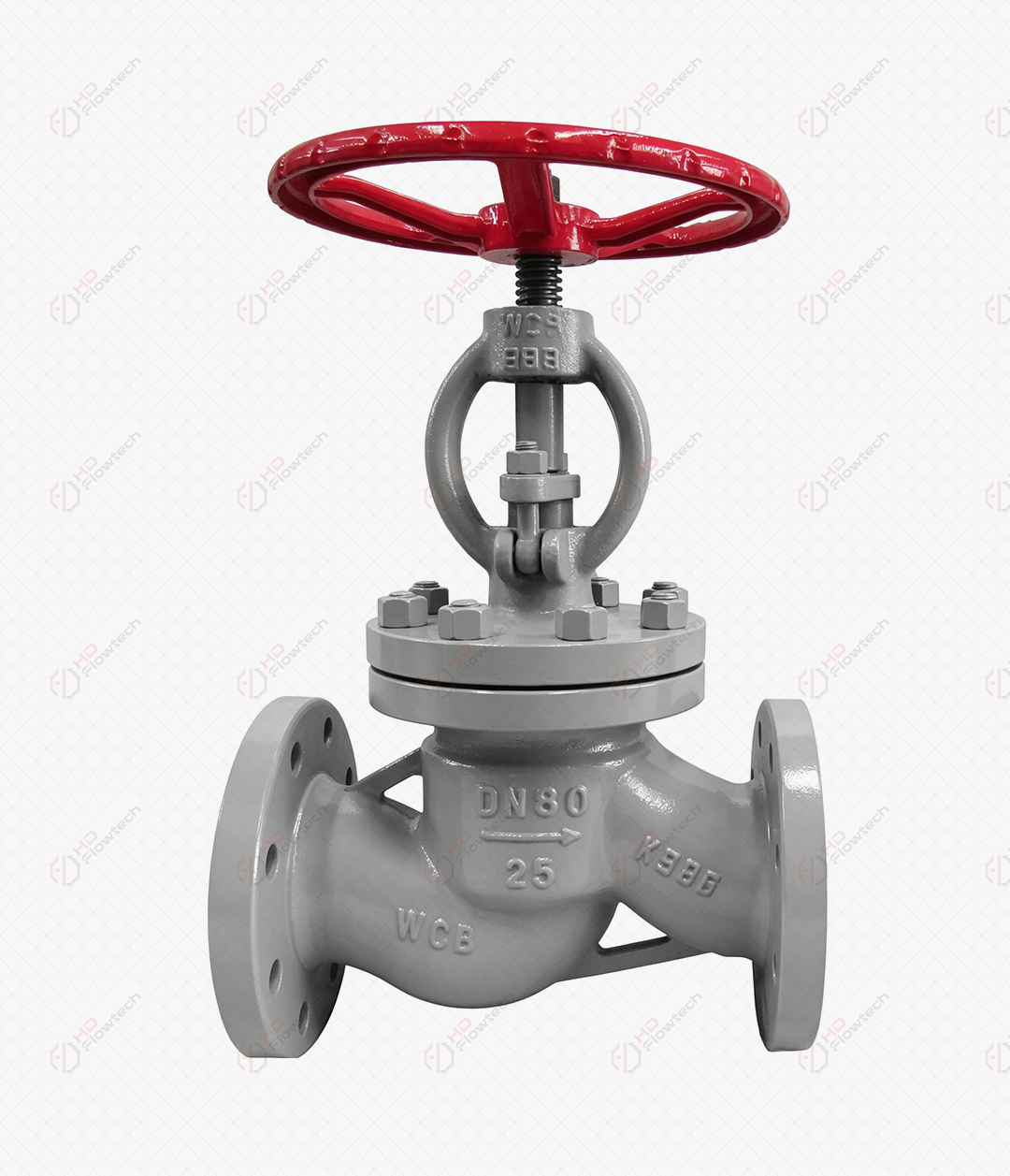
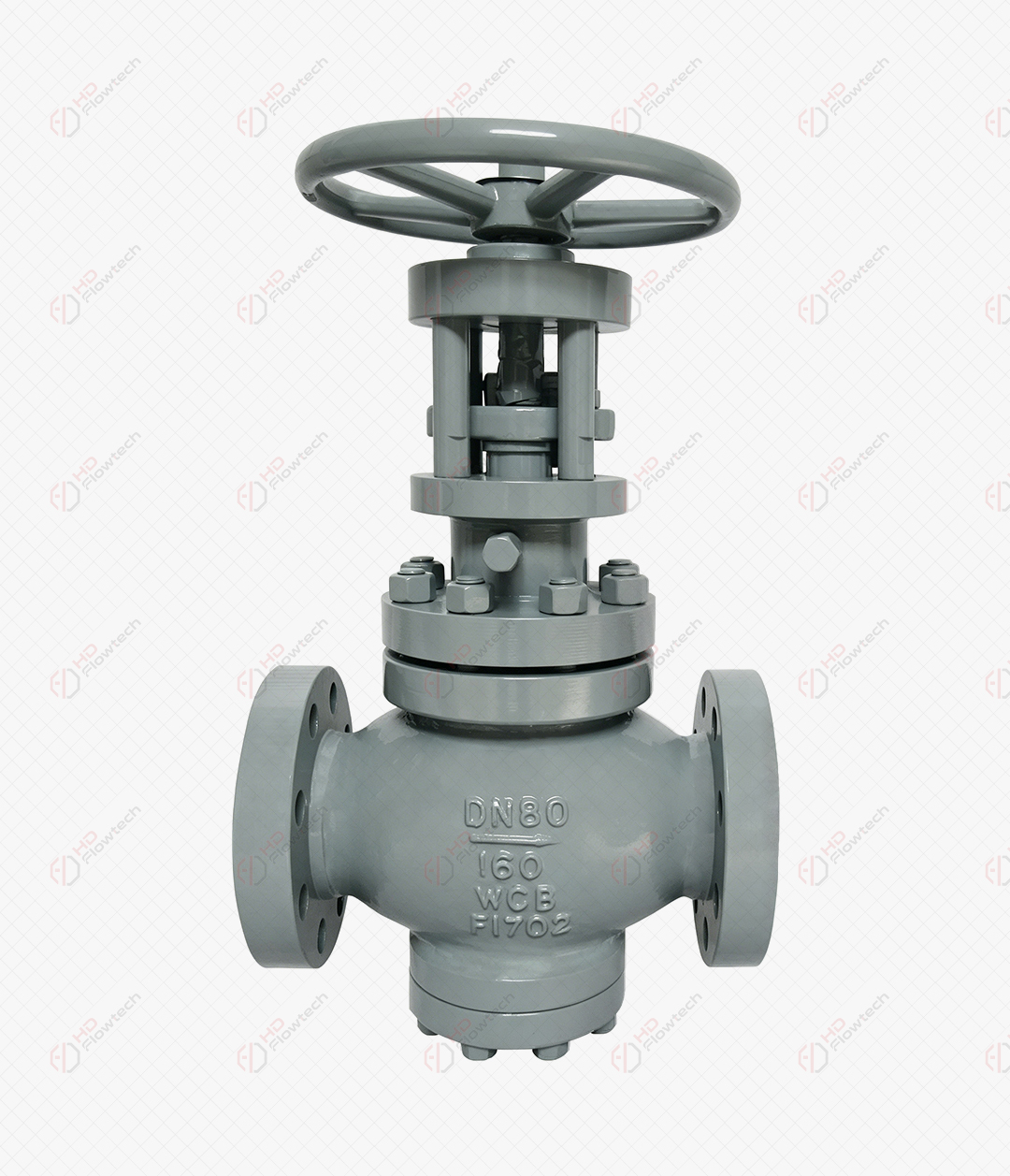
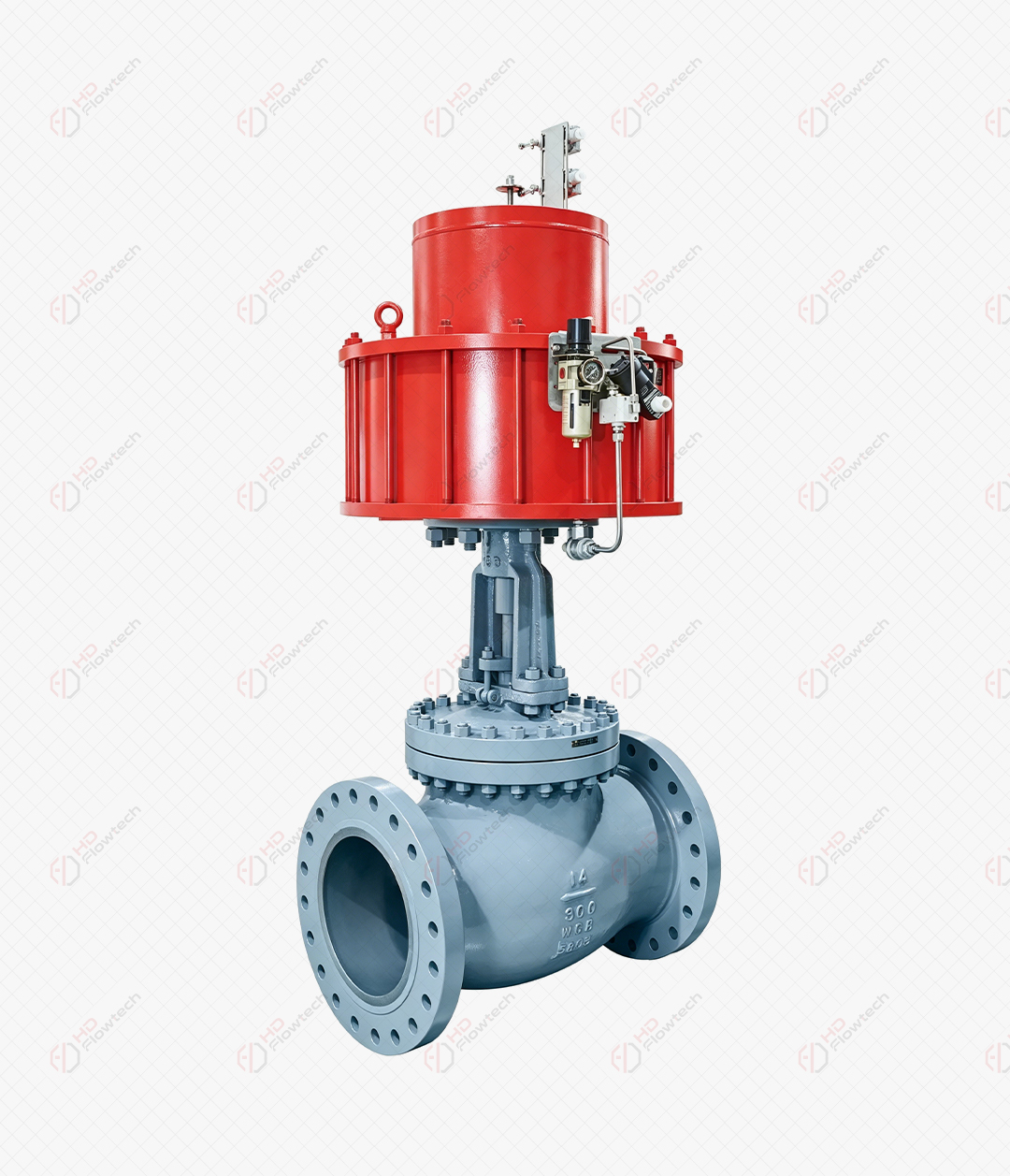
Angle globe valves are selected for isolation and throttling service where a 90° change in flow direction is required at the valve location, combining the function of a standard globe valve and a pipe elbow in a single compact body. This eliminates one flanged joint and fitting from the pipeline, reducing potential leak points, installation weight, and overall pipeline space requirements — making angle globe valves the practical specification for steam trap inlet connections, heat exchanger inlet and outlet piping, and process plant installations where space is constrained and flow direction change is required.
The angle pattern body provides lower pressure drop than a standard globe valve for equivalent disc and seat geometry, as flow passes through only a single 90° turn rather than the S-shaped flow path of a straight pattern globe valve — a useful characteristic for steam and condensate service where pressure drop minimization is important for system efficiency. Throttling performance is equivalent to straight pattern globe valves, with the rising stem providing incremental flow control across the full stroke for steam flow regulation, pressure letdown, and process flow balancing duty.
Body material selection follows standard globe valve criteria — GS-C25 and WCB for general process and steam service up to 425°C, alloy steel (WC6, WC9) for high-temperature steam applications up to 600°C, and stainless steel (CF8, CF8M) for corrosive media. Design standards EN 13709 and ASME B16.34 govern angle globe valve pressure-temperature ratings and material requirements for general process and steam service applications.