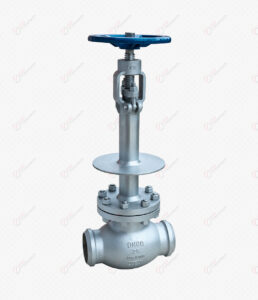
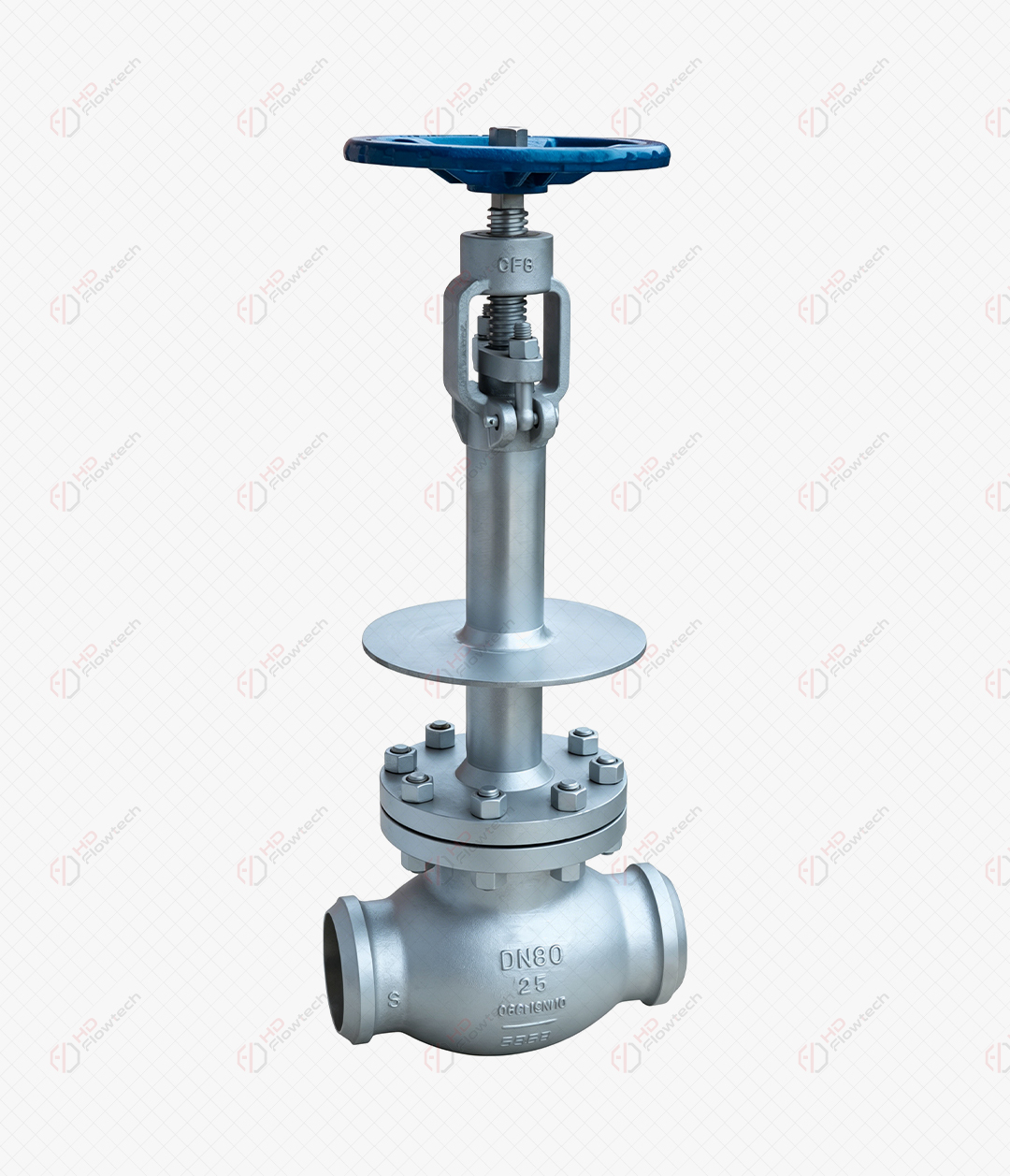
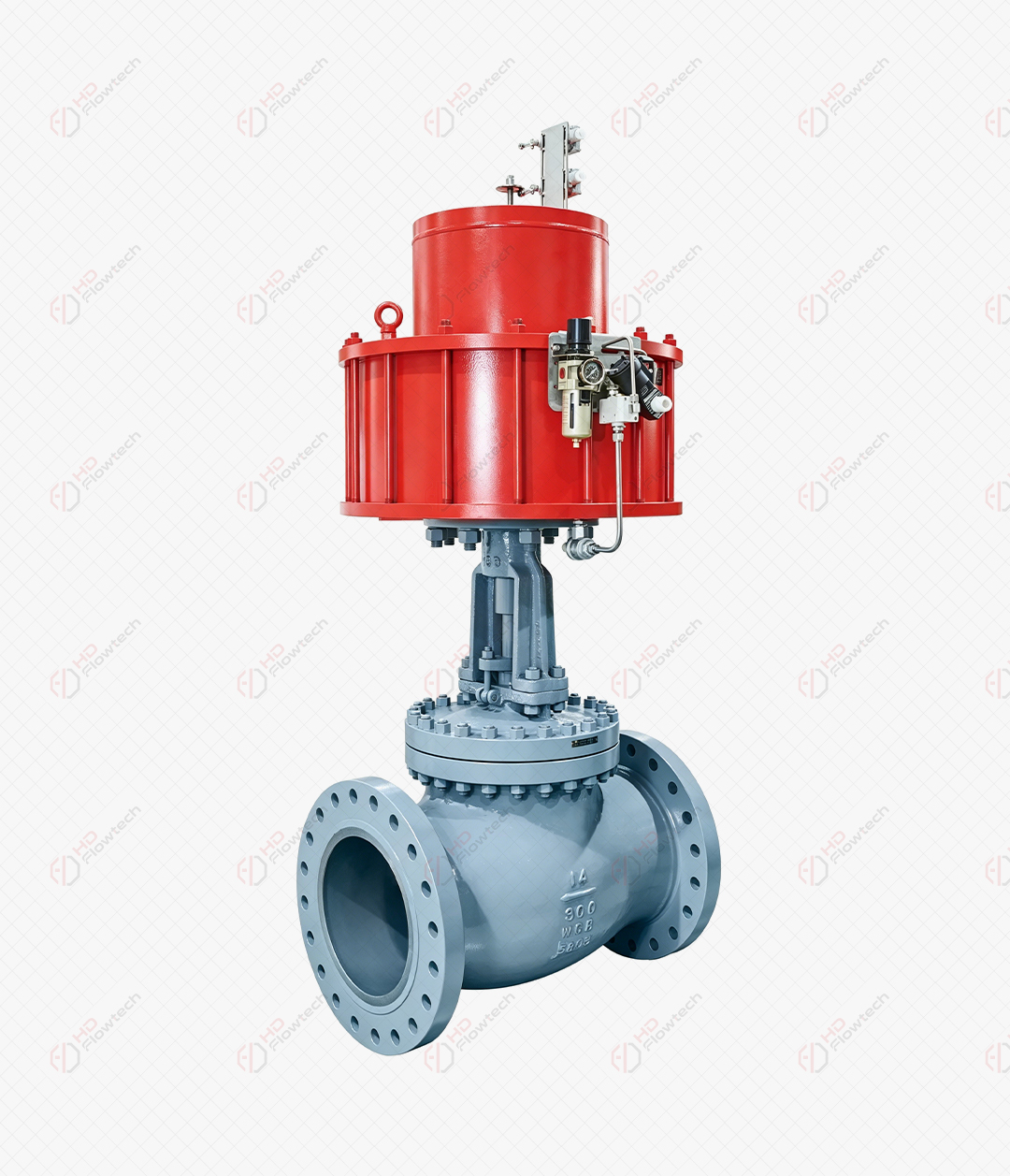
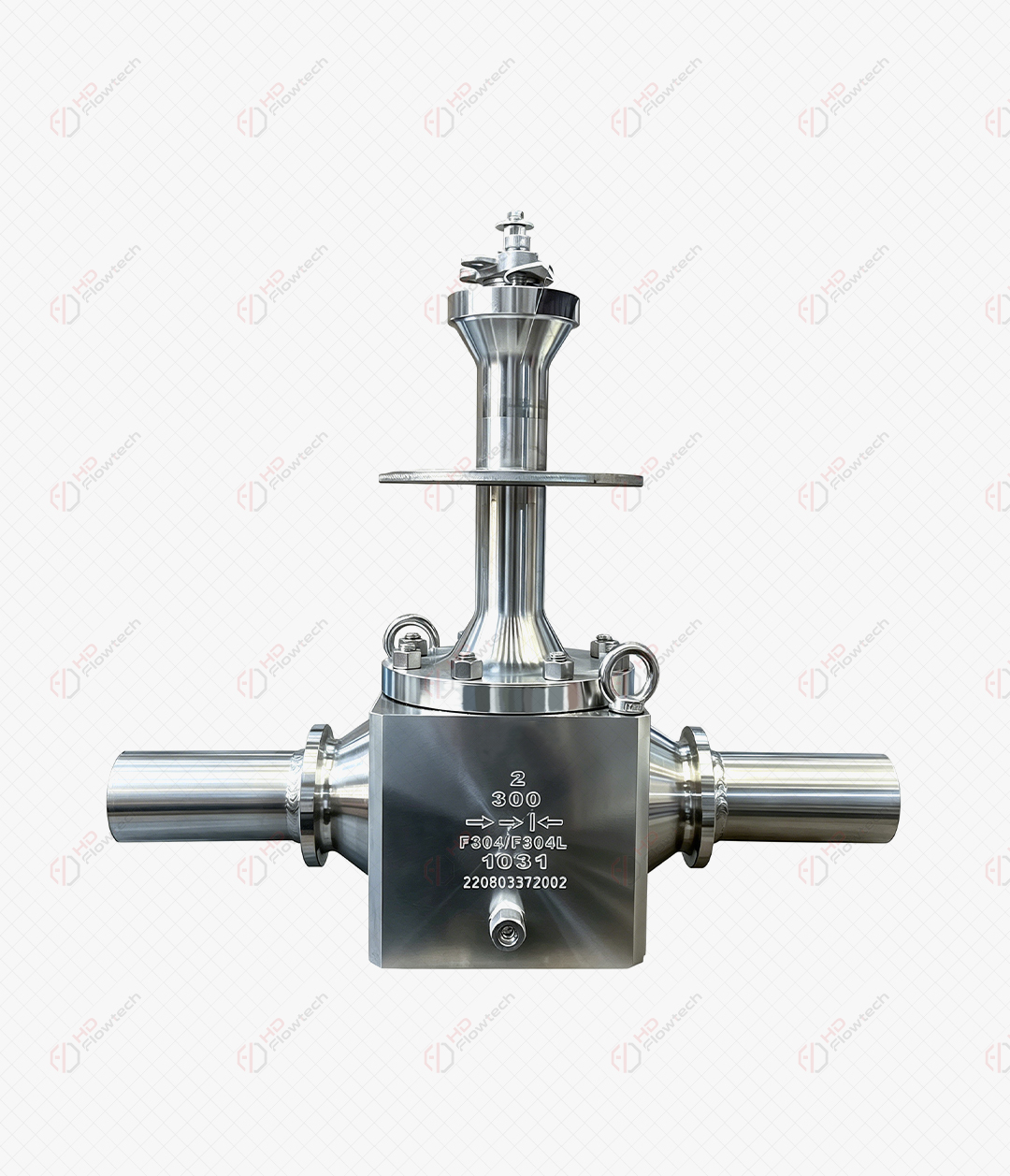
Cryogenic globe valves are selected for isolation and throttling service in low-temperature pipeline systems where the precise flow control capability of a globe valve is required in addition to shut-off, and where standard valve designs are not suitable due to material embrittlement, stem seal icing, and packing failure at sub-zero conditions. The extended bonnet is the mandatory design feature for cryogenic globe valves — raising the stem packing above the cold zone to prevent atmospheric moisture from freezing around the stem seal, ensuring reliable stem operation and zero external leakage throughout the valve’s service life at temperatures down to −196°C.
Cast stainless steel body construction (CF8, CF8M) is standard for cryogenic globe valves, providing the impact toughness and ductility at low temperatures that carbon steel and standard valve materials cannot sustain. CF3 and CF3M low-carbon grades are specified for welded assemblies where sensitization prevention is required — critical for butt weld end connections in cryogenic pipeline systems where weld heat-affected zone integrity determines the long-term corrosion and mechanical performance of the joint. LCB and LF2 carbon steel grades cover intermediate low-temperature service from −46°C for LPG and cold climate applications where stainless steel is not required.
Globe valve configuration is selected over ball valves for cryogenic applications requiring both shut-off and precise flow control — cryogenic flow control stations, liquid gas loading arms, and process systems where throttling capability is required in addition to isolation. Butt weld end connections are the standard specification for cryogenic globe valves, eliminating flanged joint leak paths in systems handling flammable LNG and asphyxiating liquid nitrogen where zero external leakage is mandatory. Design standards BS 6364 and ASME B16.34 govern cryogenic globe valve design, extended bonnet dimensions, material requirements, and low-temperature testing criteria